|
|
Korissia (Livadi)
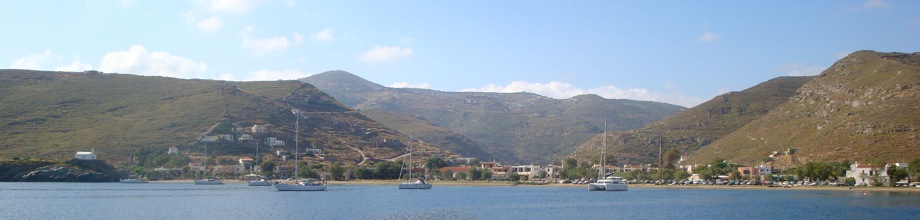
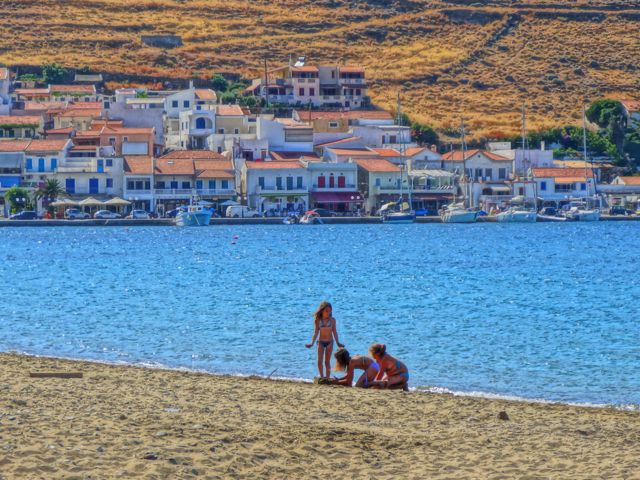 The port of Korissia, also known as
Livadi, is the first place you will see when you
arrive on the island since this is where the ferry
docks and unless you come by helicopter the ferry or yacht is the only way to get here. There is a long sandy beach, a couple well stocked supermarket,
several restaurants, cafes, bars and a hotel or two.
Above the port on the hill of Agia Triada are the
ruins of the ancient acropolis and what is believed to
be an archaic temple dedicated to Apollo. The statue
known as the Kouros of Kea in the National Museum in
Athens was found here. Livadia was pretty much
deserted during the centuries of Ottoman rule but in
1922 it was repopulated by refugees from Asia Minor.
For ferry watchers it is a good place to be because ferries from Lavrion sail back and forth
several times a day and a
few times a week the ferry from Syros makes an appearance here. You can catch the
bus to Ioulis (or Hora as we locals call it) from here and
there are taxis that will take you anywhere when they
are not taking somebody else. You can also rent
motorbikes if you can find the guy who rents them. Cars too. If you get to the rental office and nobody is there, there should be a number posted on the door. If it is August they will be there but they probably won't have any cars so it does not really matter. But you can also rent from Swift in Athens and drive the car to the ferry which is always a fun experience. The port of Korissia, also known as
Livadi, is the first place you will see when you
arrive on the island since this is where the ferry
docks and unless you come by helicopter the ferry or yacht is the only way to get here. There is a long sandy beach, a couple well stocked supermarket,
several restaurants, cafes, bars and a hotel or two.
Above the port on the hill of Agia Triada are the
ruins of the ancient acropolis and what is believed to
be an archaic temple dedicated to Apollo. The statue
known as the Kouros of Kea in the National Museum in
Athens was found here. Livadia was pretty much
deserted during the centuries of Ottoman rule but in
1922 it was repopulated by refugees from Asia Minor.
For ferry watchers it is a good place to be because ferries from Lavrion sail back and forth
several times a day and a
few times a week the ferry from Syros makes an appearance here. You can catch the
bus to Ioulis (or Hora as we locals call it) from here and
there are taxis that will take you anywhere when they
are not taking somebody else. You can also rent
motorbikes if you can find the guy who rents them. Cars too. If you get to the rental office and nobody is there, there should be a number posted on the door. If it is August they will be there but they probably won't have any cars so it does not really matter. But you can also rent from Swift in Athens and drive the car to the ferry which is always a fun experience.
|
|
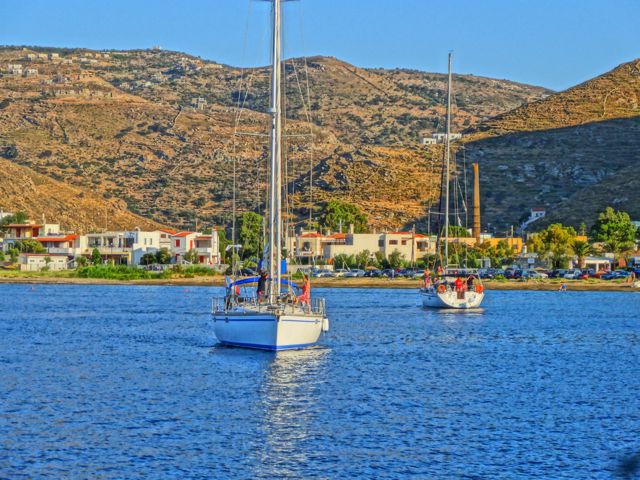 It is hard not to notice the large smokestack and
the ruins of the Enamel and Metallurgy factory that
sits in the valley of Livadi. The factory which was
owned by Ioannis Gleoudis had 900 employees who
produced enamel products, canteens, helmets and other
equipment during the pre-war period. Because of this
factory and the coal supply center for steamships at
Agios Nikolaos, the people of Kea were able to survive
during the years when many other islands were
destitute. There is something about having a big old
deserted factory on a small greek island that makes
you realize that these places did not spring up out of
the sea as tourist destinations. Islands like Kea
existed before tourism and they will probably exist
after tourism too. For me, seeing the remains of an
old factory is as interesting as the ruins of an
ancient temple and in most cases leaves less to the
imagination. If you walk up the road to Ioulida about 100 meters or so on the left you will come to an outdoor museum that has equipment from the factory. When the factory closed many of the people who worked there and lived all their lives on the island had to move to Athens. A few have moved back and some have their family houses here which they visit in August, summer weekends and at Easter. It is hard not to notice the large smokestack and
the ruins of the Enamel and Metallurgy factory that
sits in the valley of Livadi. The factory which was
owned by Ioannis Gleoudis had 900 employees who
produced enamel products, canteens, helmets and other
equipment during the pre-war period. Because of this
factory and the coal supply center for steamships at
Agios Nikolaos, the people of Kea were able to survive
during the years when many other islands were
destitute. There is something about having a big old
deserted factory on a small greek island that makes
you realize that these places did not spring up out of
the sea as tourist destinations. Islands like Kea
existed before tourism and they will probably exist
after tourism too. For me, seeing the remains of an
old factory is as interesting as the ruins of an
ancient temple and in most cases leaves less to the
imagination. If you walk up the road to Ioulida about 100 meters or so on the left you will come to an outdoor museum that has equipment from the factory. When the factory closed many of the people who worked there and lived all their lives on the island had to move to Athens. A few have moved back and some have their family houses here which they visit in August, summer weekends and at Easter.
|
|
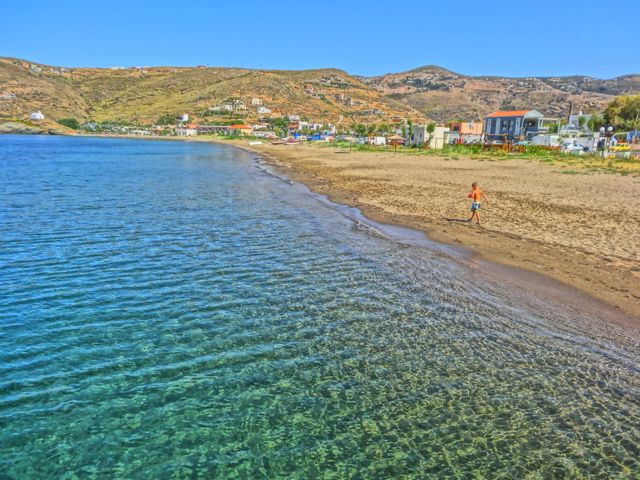 The main beach in Livadia is a long sandy stretch that
lies at the end of the valley anchored on one end the small church of Agios Giorgos and on the other, the shops and restaurants of the port. There are a
several good restaurants and cafes to hang out at and there are two hotels, one
apartment style overlooking the beach from the town
called the Hotel Karthea, and the other the new Hotel Porto Kea which is as close to a luxury resort as you will find on the island. There are several hotels and rooms
to
rent in the valley if you want to be close to the port
and the beach. The best choice is the Red Tractor Farms Guest House which is part of an eco-tourism enterprise run by the famous Kostis Marulis. The only time you will have a problem
getting a room is in August and maybe during holiday weekends. The Red Tractor Farm itself is one of the most interesting and beautiful spots in Korissia with several acres of olive trees, orchards, and grape vines, a rural paradise within the town limits. Completely eco-friendly it is the perfect marriage of tradition and environmental responsibility and could serve as an example as what the future of tourism in Greece should look like, symbolized by the giant stone egg that greets guests
on their arrival. There are a couple more hotels in the valley, a few minutes walk from the port and they are listed on the hotel page. The main beach in Livadia is a long sandy stretch that
lies at the end of the valley anchored on one end the small church of Agios Giorgos and on the other, the shops and restaurants of the port. There are a
several good restaurants and cafes to hang out at and there are two hotels, one
apartment style overlooking the beach from the town
called the Hotel Karthea, and the other the new Hotel Porto Kea which is as close to a luxury resort as you will find on the island. There are several hotels and rooms
to
rent in the valley if you want to be close to the port
and the beach. The best choice is the Red Tractor Farms Guest House which is part of an eco-tourism enterprise run by the famous Kostis Marulis. The only time you will have a problem
getting a room is in August and maybe during holiday weekends. The Red Tractor Farm itself is one of the most interesting and beautiful spots in Korissia with several acres of olive trees, orchards, and grape vines, a rural paradise within the town limits. Completely eco-friendly it is the perfect marriage of tradition and environmental responsibility and could serve as an example as what the future of tourism in Greece should look like, symbolized by the giant stone egg that greets guests
on their arrival. There are a couple more hotels in the valley, a few minutes walk from the port and they are listed on the hotel page.
|
|
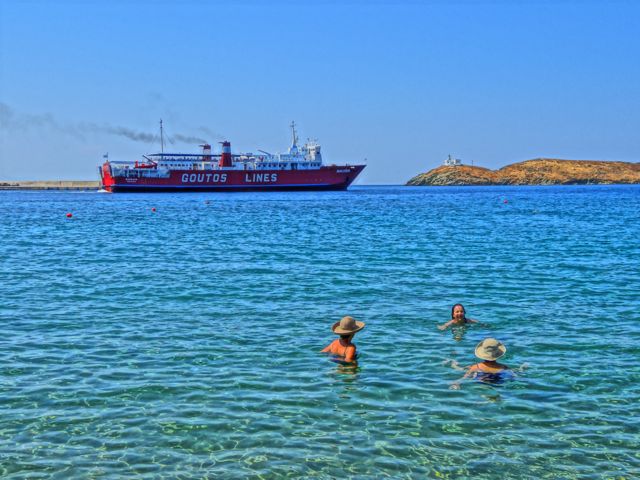 As ports go Livadia is not too bad for swimming since the bay is so big and the rough seas flush it out from time to time when the wind blows from the north. In fact Korissia is a really nice place to swim. With so many other great beaches on the island where you can go and probably not see another person the
best reason to swim here is if you happen to be staying nearby or you find the antics of other people on the beach entertaining or you want to be close to somewhere for lunch. But Marcie from Red Tractor Farms swears the sea here is the cleanest that you will find in any port and swims across
the bay just about every day. The Hotel Porto Kea has taken over their end of the beach and keeps it clean and beautiful and the town takes care of the rest. As ports go Livadia is not too bad for swimming since the bay is so big and the rough seas flush it out from time to time when the wind blows from the north. In fact Korissia is a really nice place to swim. With so many other great beaches on the island where you can go and probably not see another person the
best reason to swim here is if you happen to be staying nearby or you find the antics of other people on the beach entertaining or you want to be close to somewhere for lunch. But Marcie from Red Tractor Farms swears the sea here is the cleanest that you will find in any port and swims across
the bay just about every day. The Hotel Porto Kea has taken over their end of the beach and keeps it clean and beautiful and the town takes care of the rest.
|
|
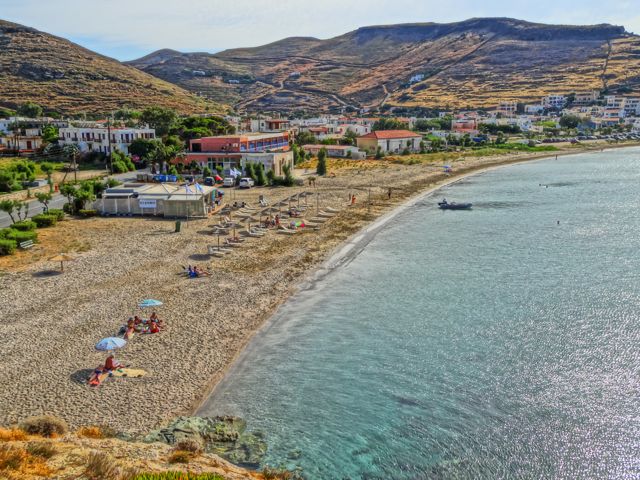 At the far end of the beach is a small church dedicated to Saint George and
just beyond that is the Villa Maroulis, owned by one of the old families who came to the island from Asia Minor after the fall of Constantinople in 1453. The valley of
Livadia was later populated by refugees from Asia Minor who
came to Kea in 1922 after the exchange of populations which
was initiated with the policy of ethnic cleansing by
Attaturk and the burning of the city of Smyrna by the Turkish army. Though Ioulida (Hora) is the capital of the island, and actually the administrative capital of the island of Kythnos as well, the commercial center is Korissia-Livadi where you will find most of the banks, hardware stores, electronic shops, supermarkets and since this is the point where the ferry comes in, the primary transportation hub of the island, if you want to call it that. At the far end of the beach is a small church dedicated to Saint George and
just beyond that is the Villa Maroulis, owned by one of the old families who came to the island from Asia Minor after the fall of Constantinople in 1453. The valley of
Livadia was later populated by refugees from Asia Minor who
came to Kea in 1922 after the exchange of populations which
was initiated with the policy of ethnic cleansing by
Attaturk and the burning of the city of Smyrna by the Turkish army. Though Ioulida (Hora) is the capital of the island, and actually the administrative capital of the island of Kythnos as well, the commercial center is Korissia-Livadi where you will find most of the banks, hardware stores, electronic shops, supermarkets and since this is the point where the ferry comes in, the primary transportation hub of the island, if you want to call it that.
|
|
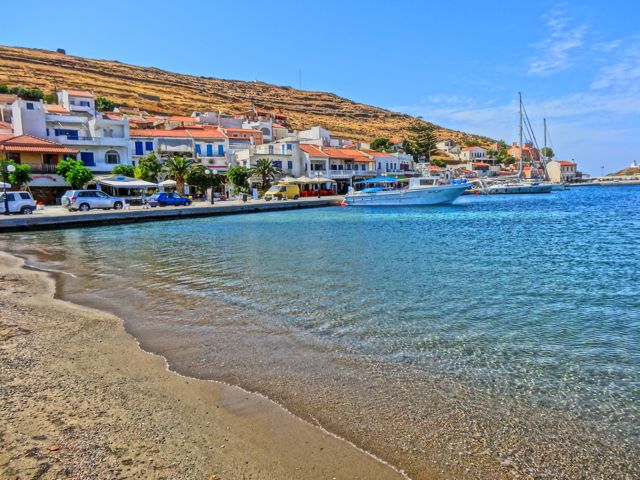 There are several good restaurants in Korissia. One of the best among them is To Steki tou Stroggili which is in an old mansion above the port on the road to the church right above where the ferry comes in. Dimitris and his small staff have a variety of local and regional dishes in a traditional Greek taverna setting. Very nice wine,
grilled meats, lots of oven dishes, salads and mezedes if you just want to come and drink ouzo and watch
the view. Other restaurants in the port include Lagoudara
which has the usual island dishes and some very nice salads. The famous Rolando has opened his world renown restaurant in Korissia and some of his fans are happy they don't have to walk up the hill in Ioulida anymore. There are two souvlaki-shop/psistarias that serve grilled meats and salads. But if you are adventurous walker or have a car go across the bay and follow the road sign to Fotomari, just beyond the Hotel Porto Kea and go to Filipos Psistaria for the best grilled meats
and the best view as well. On weekends
in the summer he often has whole goats, lambs and pigs roasting on his rotisserie. One restaurant you may not want to overlook is the taverna There are several good restaurants in Korissia. One of the best among them is To Steki tou Stroggili which is in an old mansion above the port on the road to the church right above where the ferry comes in. Dimitris and his small staff have a variety of local and regional dishes in a traditional Greek taverna setting. Very nice wine,
grilled meats, lots of oven dishes, salads and mezedes if you just want to come and drink ouzo and watch
the view. Other restaurants in the port include Lagoudara
which has the usual island dishes and some very nice salads. The famous Rolando has opened his world renown restaurant in Korissia and some of his fans are happy they don't have to walk up the hill in Ioulida anymore. There are two souvlaki-shop/psistarias that serve grilled meats and salads. But if you are adventurous walker or have a car go across the bay and follow the road sign to Fotomari, just beyond the Hotel Porto Kea and go to Filipos Psistaria for the best grilled meats
and the best view as well. On weekends
in the summer he often has whole goats, lambs and pigs roasting on his rotisserie. One restaurant you may not want to overlook is the taverna
|
|
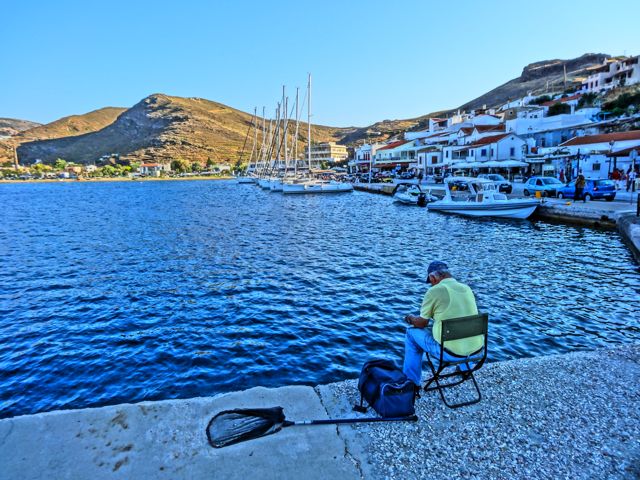 As for cafes there are a number of those too. Korissos is the most traditional and has great espresso and many people go here because it is the descendent of Tzimis which was the cafe everyone used to go to because it was right across from where the ferry docked. Check out the little yogurt shop and the wine bar right on the waterfront
almost next to each other. The wine bar, called Oinothiki plays jazz and swing and also has beer, a large and descriptive wine list, and some very nice appetisers to go with your drinks. En Plo is a nice cafe with lots of outdoor seating right where the ferry comes in and is a good place for coffee, ouzo and meze, wine, beer, cocktails and deserts and snacks if you are waiting for the ferry or just like to watch the action. As for cafes there are a number of those too. Korissos is the most traditional and has great espresso and many people go here because it is the descendent of Tzimis which was the cafe everyone used to go to because it was right across from where the ferry docked. Check out the little yogurt shop and the wine bar right on the waterfront
almost next to each other. The wine bar, called Oinothiki plays jazz and swing and also has beer, a large and descriptive wine list, and some very nice appetisers to go with your drinks. En Plo is a nice cafe with lots of outdoor seating right where the ferry comes in and is a good place for coffee, ouzo and meze, wine, beer, cocktails and deserts and snacks if you are waiting for the ferry or just like to watch the action.
There are bread shops on each end of the port and both have tiropitas and spanakopitas and lots of sweets and baked goods as well
as some traditional products from Kea like the pasteli, a seseame honey candy that makes a great gift for friends back home. If you have friends closer than a ten hour flight get some of the local sausages or the loza, smoked pork loin, a Kean version of proscuito, from the butcher with the big Fasianos painting. But for more sensible food gifts go to Aristeon on the road to Ioulida, on the left just past the oasis-like valley of Milapotamos, where the road starts to climb. They sell
all sorts of local
wine,
tsipuro, pasta, canned fruits, cheeses, sweets and even fresh local vegetables.
One of the most popular places in Livadi is actually a cafe, performance space, and restaurant in Milapotamos called Baradi. There is also a small traditional folk museum and a nice garden sitting area where many of the performances are held. The walking path between Ioulida and Korissia sort of begins there too.
Also on the road out of Korissia is Kea Laundry, a full service laundry on the road to Ioulida on the right hand side of the street. They say it is open 24 hours a day though I am not sure if that is correct nor do I know why someone visiting Kea would need it to be. But you can call them and ask. 30 698 911 9577. You can also e-mail them.
|
|
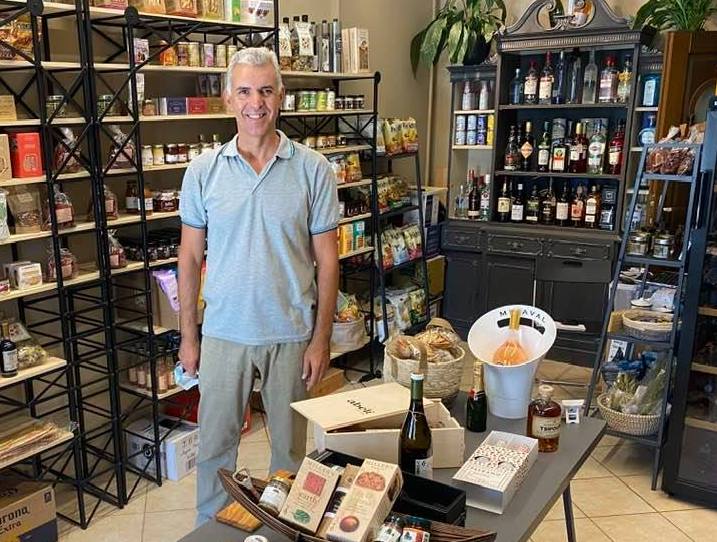 A brand new wine store opened in Korissia, Kea called ABELI Wine and Deli. Carrying many of the wines we have been ordering from Greece and Grapes and a lot more from the best wine producers in Greece, they also have the kinds of snacks that go with wine so it is really a wine store and deli or what you might call a gourmet specialty
store. But their primary focus is wine and you can find the most popular Assyrtikos from Santorini, Kidonitsa from the Peloponnesos, and the best wines from Nemea, Drama, Attika and other wine producing regions of Greece as well as abroad It is located on the road to Ioulida right by the Alpha Bank and they will deliver to hotels, homes and even yachts! The owner is Filippos and you can order by phone 22880 21864 of visit their website at www.abeli.gr or e-mail them A brand new wine store opened in Korissia, Kea called ABELI Wine and Deli. Carrying many of the wines we have been ordering from Greece and Grapes and a lot more from the best wine producers in Greece, they also have the kinds of snacks that go with wine so it is really a wine store and deli or what you might call a gourmet specialty
store. But their primary focus is wine and you can find the most popular Assyrtikos from Santorini, Kidonitsa from the Peloponnesos, and the best wines from Nemea, Drama, Attika and other wine producing regions of Greece as well as abroad It is located on the road to Ioulida right by the Alpha Bank and they will deliver to hotels, homes and even yachts! The owner is Filippos and you can order by phone 22880 21864 of visit their website at www.abeli.gr or e-mail them
|
|
Gialiskari and Vourkari
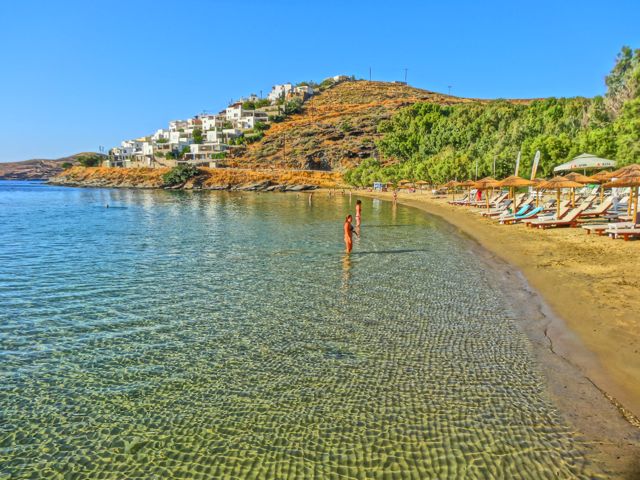 If you follow the coast road past the beach and around the peninsula you come to a nice
little beach called Gialiskari that sits in a cove
shaded by eucalyptus trees. It is pretty packed with people in the
summer but the water is blue, and beautiful and like the beach in the port not bad for a harbor beach. However, with all the other clean beaches on the island that face the open sea it seems silly to swim here despite the convenience unless you live nearby and don't have a car.
This is also where my daughter likes to go though on a normal day it seems like the only people actually in the sea are the tourists. The bus passes
by here several times a day in the summer and so you can stay in the town of Ioulis and be able to swim here. Most people prefer to take the taxis though to not be at the mercy of the buses schedules which can be infrequent and sometime non-existent if it is not July or August.
If you follow the coast road past the beach and around the peninsula you come to a nice
little beach called Gialiskari that sits in a cove
shaded by eucalyptus trees. It is pretty packed with people in the
summer but the water is blue, and beautiful and like the beach in the port not bad for a harbor beach. However, with all the other clean beaches on the island that face the open sea it seems silly to swim here despite the convenience unless you live nearby and don't have a car.
This is also where my daughter likes to go though on a normal day it seems like the only people actually in the sea are the tourists. The bus passes
by here several times a day in the summer and so you can stay in the town of Ioulis and be able to swim here. Most people prefer to take the taxis though to not be at the mercy of the buses schedules which can be infrequent and sometime non-existent if it is not July or August.
|
|
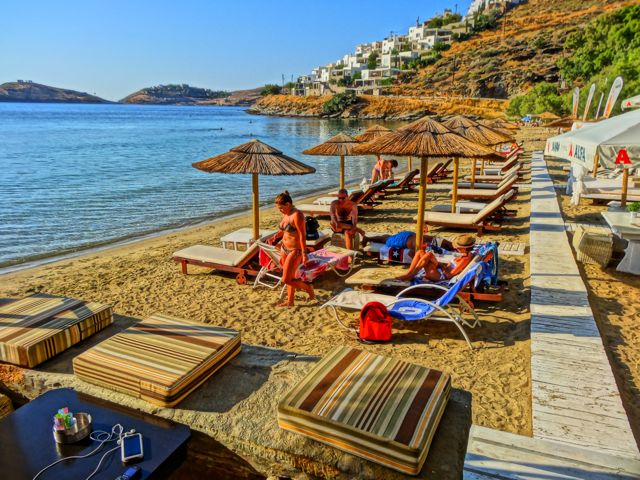 If you
are the hiking sort, there is an incredible walk from Ioulida on
the old stone roads that bring you to the main road a
mile or so from Livadia, passing through farms and
springs along the way and providing some great
opportunities for photographs. When you reach the
bottom all sweaty and tired you have the refreshing
sea and a nice cold beer or water or even lunch from the beach cafe. The density of the development in between Gialiskari and Vourkari is something to marvel at and for half a million euros you can buy a small house right above the sea close enough to hear your neighbors arguing at night. Swimming off the rocks between Gialiskari and Korissia is pretty nice, particularly towards the end of the peninsula where it faces the open sea. Nice snorkeling as well and there are interesting and often
large fish to be seen. For people like me who don't like sand, (to me sand is just another species of dirt) the rocks are a good option for sunbathing too (not that I do that either) since they are flat and you can easily get in and out of the sea in most places when the water is calm. When it isn't calm you probably won't be on the rocks anyway. If you
are the hiking sort, there is an incredible walk from Ioulida on
the old stone roads that bring you to the main road a
mile or so from Livadia, passing through farms and
springs along the way and providing some great
opportunities for photographs. When you reach the
bottom all sweaty and tired you have the refreshing
sea and a nice cold beer or water or even lunch from the beach cafe. The density of the development in between Gialiskari and Vourkari is something to marvel at and for half a million euros you can buy a small house right above the sea close enough to hear your neighbors arguing at night. Swimming off the rocks between Gialiskari and Korissia is pretty nice, particularly towards the end of the peninsula where it faces the open sea. Nice snorkeling as well and there are interesting and often
large fish to be seen. For people like me who don't like sand, (to me sand is just another species of dirt) the rocks are a good option for sunbathing too (not that I do that either) since they are flat and you can easily get in and out of the sea in most places when the water is calm. When it isn't calm you probably won't be on the rocks anyway.
|
|
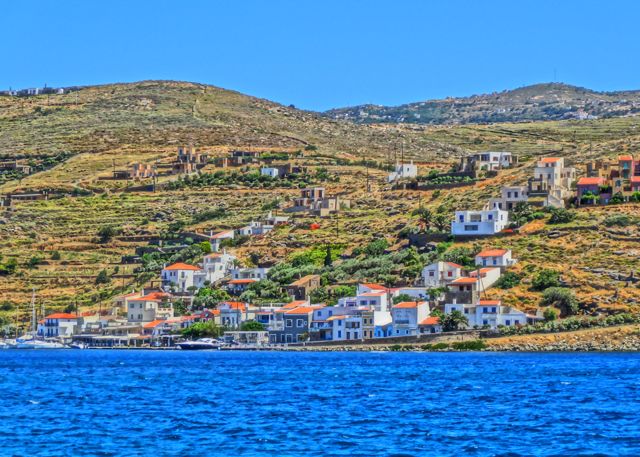 Further along around another bend is the yacht
harbor of Vourkari which has several seafood
restaurants and is where all the people who are
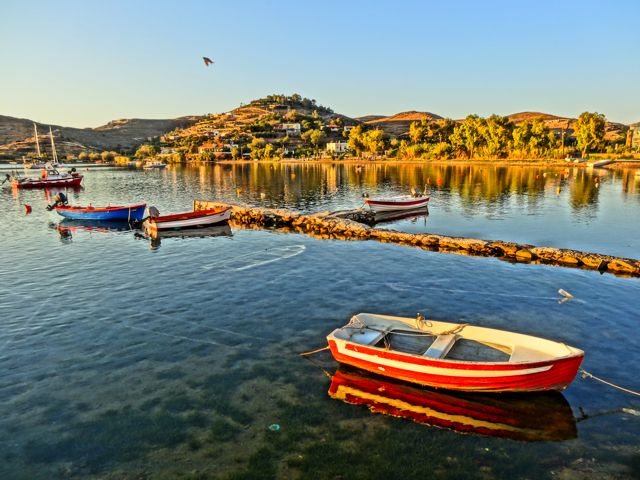
sailing the Cyclades come. The name Vourkari comes from the word vourkos which means mire (as in a swamp), not to be confused with votro which means sewer as in you don't want to swim here. The bay of Voukari looks
almost like a lake and is the most sheltered spot in
the large harbor which is why it is popular with the
yachters who know they will get a good night's rest,
even when the waves are like mountains outside the
harbor. The boats dock up, parallel-parking style right on the
street and the waitors, when they are not too busy,
run out to help by catching the lines and shouting
directions and encouragement to the sailors. When the
boats are secured the captain, crew and passengers
cross the street for an ice-cold beer, a couple ouzos
and mezedes or a seafood dinner. Most of the
restaurants serve lobster too. The seafood is generally pretty fresh since the fishing boats are based here. A progressive mayor (Yia sou Nikos) a few years ago convinced the
island to deal with some of the problems
which afflict many islands in Greece, beginning with
the sewage problem in Vourkari, by putting in a whole new
system in the summer of 2005 and then widening the road in 2009 to alleviate the nightmare of trying to drive through here or park during August and summer weekends. Of course like many progressive mayors in Greek villages and islands he was not re-elected, but he has left behind some good things and improved life on Kea.
Further along around another bend is the yacht
harbor of Vourkari which has several seafood
restaurants and is where all the people who are
sailing the Cyclades come. The name Vourkari comes from the word vourkos which means mire (as in a swamp), not to be confused with votro which means sewer as in you don't want to swim here. The bay of Voukari looks
almost like a lake and is the most sheltered spot in
the large harbor which is why it is popular with the
yachters who know they will get a good night's rest,
even when the waves are like mountains outside the
harbor. The boats dock up, parallel-parking style right on the
street and the waitors, when they are not too busy,
run out to help by catching the lines and shouting
directions and encouragement to the sailors. When the
boats are secured the captain, crew and passengers
cross the street for an ice-cold beer, a couple ouzos
and mezedes or a seafood dinner. Most of the
restaurants serve lobster too. The seafood is generally pretty fresh since the fishing boats are based here. A progressive mayor (Yia sou Nikos) a few years ago convinced the
island to deal with some of the problems
which afflict many islands in Greece, beginning with
the sewage problem in Vourkari, by putting in a whole new
system in the summer of 2005 and then widening the road in 2009 to alleviate the nightmare of trying to drive through here or park during August and summer weekends. Of course like many progressive mayors in Greek villages and islands he was not re-elected, but he has left behind some good things and improved life on Kea.
|
|
 Vourkari is also the nightlife and party area of the island and I know because I had to fight with my daughter who wanted to go down there every night of the summer. There are several cafe-bars and music clubs packed with boaters and Athenians and you will feel like you are in Mykonos. They stay
open all night, or
at least I assume they do because my daughter does not get home until morning. (This is normal in Greece). The most well known bar-club was the Vinylio Cafe-bar where DJs played music late into the night in what is considered by the hip Athenian youth to be one of the best bars in the Cyclades. This was sold and is now called Acqua Bar & Trattoria. But the owners of Vinylio have opened a small jazz bar a couple doors down called BUTLER which makes nice cocktails and plays good music. Vourkari is also the nightlife and party area of the island and I know because I had to fight with my daughter who wanted to go down there every night of the summer. There are several cafe-bars and music clubs packed with boaters and Athenians and you will feel like you are in Mykonos. They stay
open all night, or
at least I assume they do because my daughter does not get home until morning. (This is normal in Greece). The most well known bar-club was the Vinylio Cafe-bar where DJs played music late into the night in what is considered by the hip Athenian youth to be one of the best bars in the Cyclades. This was sold and is now called Acqua Bar & Trattoria. But the owners of Vinylio have opened a small jazz bar a couple doors down called BUTLER which makes nice cocktails and plays good music.
Other clubs come and go every summer so rather than tell you the names of them, which may be changed by the time I even have typed this sentence, I will just say that from the restaurants walk to the end of the bay and
follow your ears to whatever clubs have opened this summer. In general the club season is July and August
and then it gets pretty quiet.
|
|
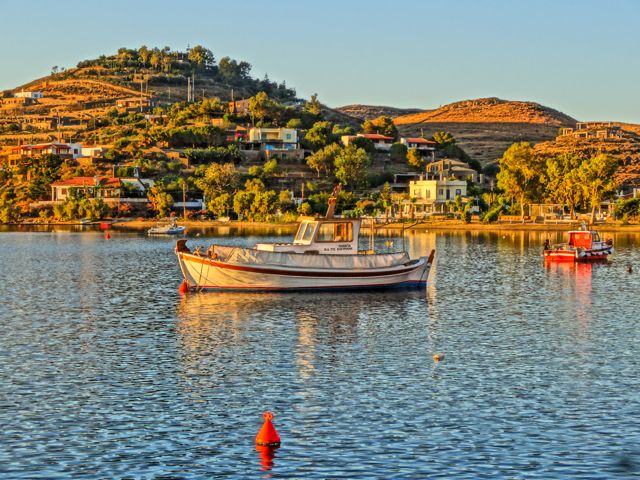 As for restaurants your best bet is Kalomira and 9 Kores which are both excellent seafood restaurants located at the beginning of the road to Otzias at the end of the bay. Vourkariani is an upscale restaurant that serves meat, fish and salads and has an art gallery attached to it. If you want
to splurge or you desire a steak the way they make it in America, for example a medium rare aged ribeye, that is the place to go. There are a couple fish tavernas right there where the boats come in but I have not eaten there in
years even though I live on the island. But they all get very good reviews and my wife and daughter ate at Aristos and loved it. One of these days I plan to go and check them out. Actually I have not eaten here since Thalia moved to Athens 5 years ago taking her delicious Anatolian mezedes with her. The best time to be in Vourkari is Sunday afternoon as the Athenian weekend boats are leaving and the sailing charters are arriving. There is nothing more enjoyable than eating grilled sardines, drinking an
ouzo and watching the new sailors attempting to parallel park
for the first time. If you have a craving for sushi there is a sushi restaurant in the Ydor Hotel. As for restaurants your best bet is Kalomira and 9 Kores which are both excellent seafood restaurants located at the beginning of the road to Otzias at the end of the bay. Vourkariani is an upscale restaurant that serves meat, fish and salads and has an art gallery attached to it. If you want
to splurge or you desire a steak the way they make it in America, for example a medium rare aged ribeye, that is the place to go. There are a couple fish tavernas right there where the boats come in but I have not eaten there in
years even though I live on the island. But they all get very good reviews and my wife and daughter ate at Aristos and loved it. One of these days I plan to go and check them out. Actually I have not eaten here since Thalia moved to Athens 5 years ago taking her delicious Anatolian mezedes with her. The best time to be in Vourkari is Sunday afternoon as the Athenian weekend boats are leaving and the sailing charters are arriving. There is nothing more enjoyable than eating grilled sardines, drinking an
ouzo and watching the new sailors attempting to parallel park
for the first time. If you have a craving for sushi there is a sushi restaurant in the Ydor Hotel.
|
|
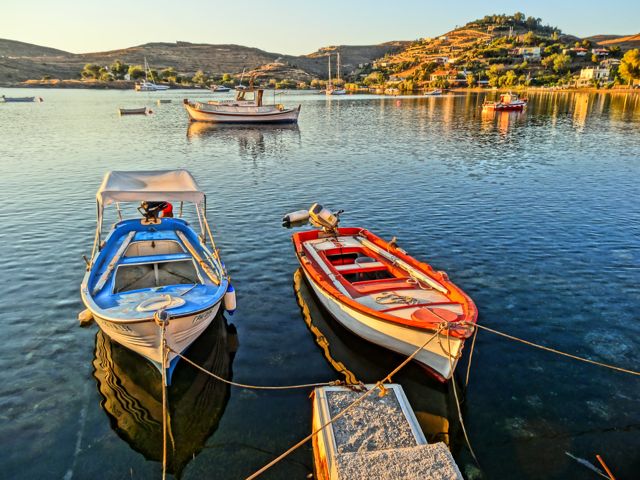 Across the bay is Agia Irini, where the ruins of a
temple to Dionysious, the fortified walls, tower
and gate of the Bronze Age settlement that once
stood here. There are also ruins from the Hellenistic
period as well as the Minoan and Mycenean periods
including the impressive Mansion of the Master.
There is a fence around it so unless you are an
archaeologist you can't get in but you can still
get a good view by walking around. There is the
remains of an old steel-hulled ship in the small
bay next to the site. Further along the Kokka
peninsula are the ruins of the Michalinos Coal
Company which used to supply steamships and the
area known as
Katsonis Crossing
where Captain Lambros Katsonis
dragged his ship across the isthmus and escaped
the Turkish fleet who thought they had him
trapped. At the very end is the Lighthouse of
Agios Nikolaos which sits on the location of an
ancient temple to Posideon, the stones of which
can still be seen. On the nearby peninsula of
Kefela close to Agia Irini, are the ruins of a
very large temple from the 6th Century BC and the
remains of some Neolithic tombs. Across the bay is Agia Irini, where the ruins of a
temple to Dionysious, the fortified walls, tower
and gate of the Bronze Age settlement that once
stood here. There are also ruins from the Hellenistic
period as well as the Minoan and Mycenean periods
including the impressive Mansion of the Master.
There is a fence around it so unless you are an
archaeologist you can't get in but you can still
get a good view by walking around. There is the
remains of an old steel-hulled ship in the small
bay next to the site. Further along the Kokka
peninsula are the ruins of the Michalinos Coal
Company which used to supply steamships and the
area known as
Katsonis Crossing
where Captain Lambros Katsonis
dragged his ship across the isthmus and escaped
the Turkish fleet who thought they had him
trapped. At the very end is the Lighthouse of
Agios Nikolaos which sits on the location of an
ancient temple to Posideon, the stones of which
can still be seen. On the nearby peninsula of
Kefela close to Agia Irini, are the ruins of a
very large temple from the 6th Century BC and the
remains of some Neolithic tombs.
|
|
Hotels and Other Accommodation
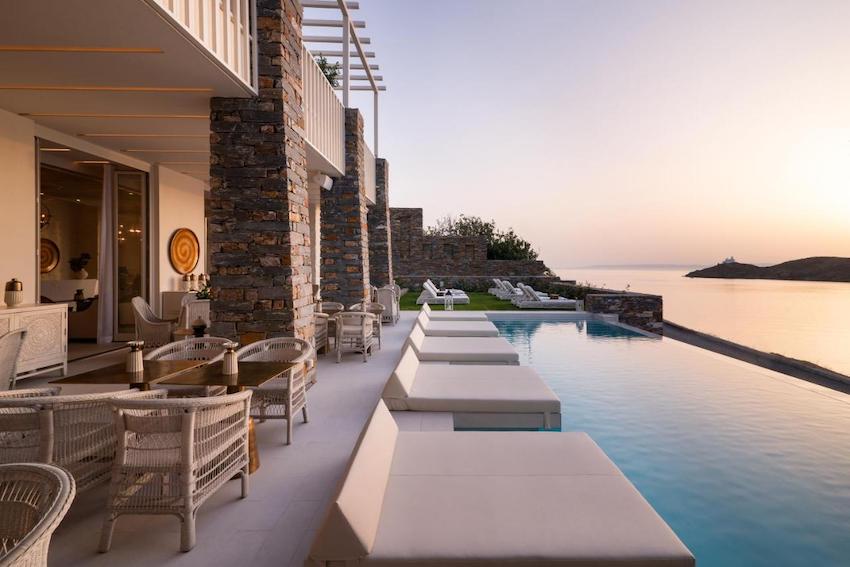
There are a few new hotels that have opened in the last few years in Vourkari. Close to all the restaurants and nightlife, a short walk from Gialiskari Beach, the new Ydor Hotel & Spa (photo) features a bar, a shared lounge and a garden, as well as free WiFi. This 5-star hotel has an outdoor pool, indoor pool, fitness center and sushi restaurant. Overlooking the Aegean Sea and Vourkari Port, modern stone-built Aigis Suites is situated on a hill. It features a seasonal outdoor infinity pool with a terrace, sun beds, umbrellas and unlimited views. Kea Mare Luxury Villas features a swimming pool free WiFi and free private parking, located in between Gialiskari Beach.and Vourkari. Quietly located at Gialiskari village, Meltemi offers self-catering
accommodations enjoying Aegean Sea views from their balcony. Free Wi-Fi is provided in all areas. Restaurants, cafes and bars are about a 2 minute walk as is Galiskari Beach. Vourkari Village ia a complex of 8 stone-built luxurious fully furnished studios within reach (just 15 minutes’ on foot) from the picturesque cosmopolitan little harbor of Vourkari.and a half hour walk to the beach at Otzias. The Art House is a vacation home with 3 bedrooms, 3 bathrooms, bed linen, towels, a flat-screen TV, a dining area, a fully equipped kitchen, and a terrace with sea views.
You can find more holiday homes, rooms and apartments on Matt's Booking.com Vourkari Page.
|
|
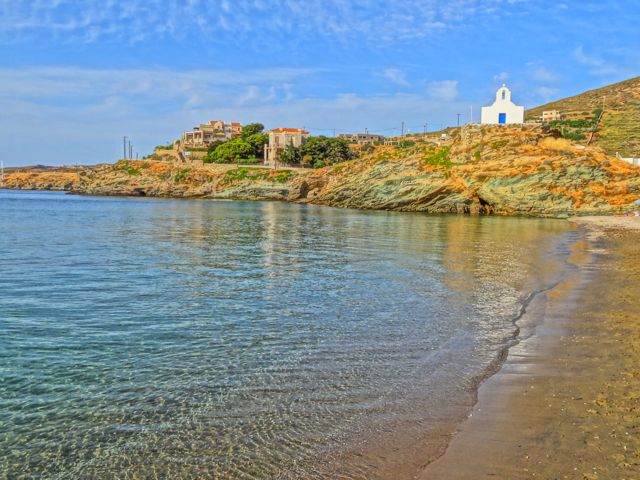 In Korissia the Red Tractor Farms
Guest House will offer you privacy in a country setting while at the same time enable you to walk to the ports of Korissia as well as the yacht port of Vourkari and give you a choice of two beaches and at least a dozen decent restaurants to eat at without having to drive. If you are the type that must stay right on the beach then the Porto Kea Suites is a nice option, ditto for those who
need a swimming pool even when the sea is just a few steps away. If you are the type who wants to be on the beach and in the town and have a balcony with a view of the ferries and sailboats coming and going then the Hotel Karthea is for you. The same goes for the stone-built Keos Katoikies across the bay which offers elegant accommodations with views of the well-kept gardens or the sea, another great spot for ferry watchers. Amphoras Apartments are right in Korissia a few steps away from the restaurants and the ferry. In Korissia the Red Tractor Farms
Guest House will offer you privacy in a country setting while at the same time enable you to walk to the ports of Korissia as well as the yacht port of Vourkari and give you a choice of two beaches and at least a dozen decent restaurants to eat at without having to drive. If you are the type that must stay right on the beach then the Porto Kea Suites is a nice option, ditto for those who
need a swimming pool even when the sea is just a few steps away. If you are the type who wants to be on the beach and in the town and have a balcony with a view of the ferries and sailboats coming and going then the Hotel Karthea is for you. The same goes for the stone-built Keos Katoikies across the bay which offers elegant accommodations with views of the well-kept gardens or the sea, another great spot for ferry watchers. Amphoras Apartments are right in Korissia a few steps away from the restaurants and the ferry.
You can find more holiday homes, rooms and apartments on Matt's Booking.com Korissia Page.
As I have written numerous times in this guide, the best beaches and the most beautiful parts of the island are accessible only by car so unless you are the type of person who can hike up and down mountains for ten hours a day, even if you stay down here by the sea you may still want to rent a car. And with or without a car there is enough to see and do in this area to keep you occupied for three or four days if you throw in a day or night visiting
Hora (Ioulida). If you are here on a boat you will find Korissia-Livadi a little more entertaining than Vourkari with more in the choice of restaurants and shops for provisions. But both are fun places for sailors and for many this is the first or last stop on their weekly charters being one of the best harbors in the Aegean.
|
|