History of Tinos
|
During the Persian wars the Tinians were subjects of the Persians. A Tireme commander from Tinos named Panaitios Sosimenous deserted the Persian fleet to inform the Greeks of their plans enabling the Greeks to prepare and win the greatest naval battle in ancient history and stop the advance of the Persians. Were it not for Sosimenous we might all be speaking Farsi today. Tinos fought against the Persians in the great battle at Plataea and became a member of the Delian alliance before becoming part of the empires of Macedonia, the Ptolemies and finally the Romans in the 2nd century AD. |
|
|
|
When Tinos finally passed from Venetian into Turkish hands they were allowed rights and privileges which were unheard of on other islands under Turkish occupation. They were the only people in the Ottoman empire not required to wear the red stockings, could wear local dress and were allowed to build churches and schools. The Turkish fleet was not permitted within 12 miles of Tinos and there were no permanent Turkish residents. Even the representatives of the Ottoman government were rarely around. Though Turkish rule was almost non-existent compared to other parts of Greece, Tinians still left the island for the cities of Constantinople, Smyrna and Alexandria with their large Christian populations and economic opportunities. With all these Tinians in business in foreign ports the island became quite wealthy and was known as 'Little Paris' with a population of almost 30,000. During this period the fortifications of Xobourgo were dismantled and people bean to move to the present day Hora, known as the Limani (harbor) of Agios Nikolaos, named for the small church there. From 1770 to 1774 the Russians occupied Tinos and built the Church of Agia Katerini and the Kechrovouni Convent was renovated. But as the Ottoman empire began to decline the privileges of the Tinians began to disappear and Tinos joined the Revolution of 1821 on April 20th. |
|
The people of Tinos with their wealth, culture, education and seafaring abilities played an important role in the Revolution giving ships, sailors, and heroes. Over two thousand of them died in the war. The island became something of a refugee center with as many as thirty thousand of them finding shelter there from the vengeance of the Turks. It was on January 30 1833 when icon of the Panagia (Virgin Mary ) was discovered and seen as a blessing for the success of the revolution. Many of Greece's greatest heroes of the revolution came to Tinos to pay respect to it including Kolokotronis, Kanaris, Miaoulis, and Makryiannis and after the war the town was established as a Pan Hellenic religious center. Many of the marble workers moved to Athens to build the new capital of Greece.
Since then Tinos has become the capital of Religious Tourism in Greece. This increase in tourism drew people from the villages into the Hora for a period of time though now this seems to have reversed and villages which had been mostly deserted are again prospering as not only foreigners discover the island but the Greeks themselves many who have become bored with the decedent style of mass tourism found on the other more popular Cyclades islands. As more people return to the villages, more businesses open, farmers can plant more because they can sell more, craftsmen return because they now have a market for their goods, tavernas open or re-open because once again there are people to eat in them. Because of its size, agricultural areas, and beauty the island of Tinos seems to have a great future, if they make the right decisions. For more on Greek History see www.ahistoryofgreece.com |
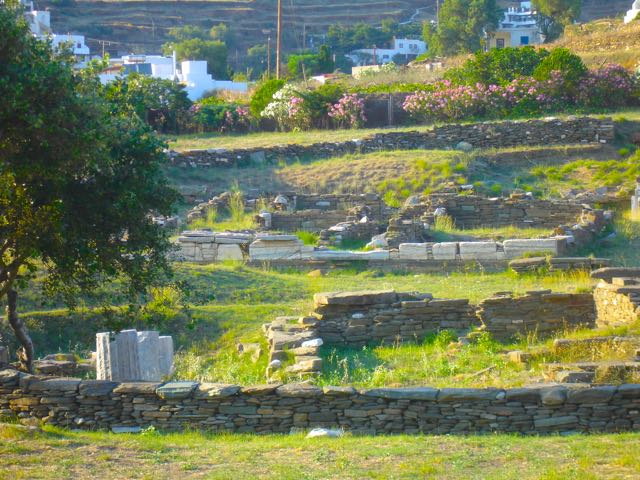 Originally Tinos was called Ophiousa because it had a lot of snakes (not anymore, don't worry) and also Ydrousa because it had a lot of water. (It still does, by Cyclades standards anyway). In Koinia there was a temple to Poseidon who had sent a flock of storks to get rid of the snakes (See, I told you). Tinos has been populated at least since the Bronze
age and
its history can be traced back to the Mycenaean period. The main town of the island was the big stone mountain of Xobourgo, the most defensible spot on Tinos. By the 5th Century the town had moved to the location of the present day Hora and the Temple of Poseidona was built in Kionia where its ruins can still be seen. To a lesser extent than nearby Delos, Tinos was an important religious center during the pre-Christian era and attracted many pilgrims who came for the ceremonies known as
the Poseidona held in January and February. In the third century the worship of Amphitre, the wife of Poseidon became popular and the temple was renovated and enlarged. As many others were, it was destroyed by the Christians in the 4th Century AD.
Originally Tinos was called Ophiousa because it had a lot of snakes (not anymore, don't worry) and also Ydrousa because it had a lot of water. (It still does, by Cyclades standards anyway). In Koinia there was a temple to Poseidon who had sent a flock of storks to get rid of the snakes (See, I told you). Tinos has been populated at least since the Bronze
age and
its history can be traced back to the Mycenaean period. The main town of the island was the big stone mountain of Xobourgo, the most defensible spot on Tinos. By the 5th Century the town had moved to the location of the present day Hora and the Temple of Poseidona was built in Kionia where its ruins can still be seen. To a lesser extent than nearby Delos, Tinos was an important religious center during the pre-Christian era and attracted many pilgrims who came for the ceremonies known as
the Poseidona held in January and February. In the third century the worship of Amphitre, the wife of Poseidon became popular and the temple was renovated and enlarged. As many others were, it was destroyed by the Christians in the 4th Century AD.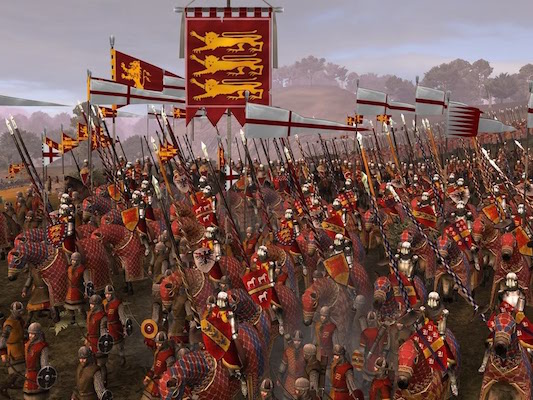 During the Byzantine period once again the islanders moved back to the defensible interior to avoid the raids of Arab and Saracen pirates who preyed on all the islands of the Aegean. In 1203 the European Christians of the 3rd Crusade on their way to liberate the Holy-land, decided to liberate their Christian neighbors in Constantinople of their wealth instead and in the process burned down the city. They tortured and massacred their fellow Christians, destroyed
churches, palaces, monasteries and even sculptures made by Phedias and Praxiteles. They stole icons, relics and anything of value and they burned countless ancient Greek manuscripts. Tinos and the other islands of the Cyclades fell into the hands of the Venetians Ghizzi dynasty which ruled the island until 1390 when Tinos and Mykonos fell under the direct jurisdiction of Venice and were sent a governor. Tinos remained a part of the Venetian empire until 1715 long after the rest of Greece had fallen to the
Turks and maintained a society that was far more advanced than what was found in the other islands in terms of art, culture, food production, agriculture, pottery and even the production of silk. It was also a place of refuge for people trying to escape the other parts of Greece which were occupied by the Turks.
During the Byzantine period once again the islanders moved back to the defensible interior to avoid the raids of Arab and Saracen pirates who preyed on all the islands of the Aegean. In 1203 the European Christians of the 3rd Crusade on their way to liberate the Holy-land, decided to liberate their Christian neighbors in Constantinople of their wealth instead and in the process burned down the city. They tortured and massacred their fellow Christians, destroyed
churches, palaces, monasteries and even sculptures made by Phedias and Praxiteles. They stole icons, relics and anything of value and they burned countless ancient Greek manuscripts. Tinos and the other islands of the Cyclades fell into the hands of the Venetians Ghizzi dynasty which ruled the island until 1390 when Tinos and Mykonos fell under the direct jurisdiction of Venice and were sent a governor. Tinos remained a part of the Venetian empire until 1715 long after the rest of Greece had fallen to the
Turks and maintained a society that was far more advanced than what was found in the other islands in terms of art, culture, food production, agriculture, pottery and even the production of silk. It was also a place of refuge for people trying to escape the other parts of Greece which were occupied by the Turks.
|
|
|
|


