|
While putting together my History of Greece website
I read more than I had in years. Some of these books were very helpful and I
have tried to list them in that order. Most of them are easy reading. Some of
them are hard to come by but if you google the titles you should find them for hopefully less than a few hundred dollars.
Most of the historical novels like Mary Renault
can be found in the literature section.
|
|
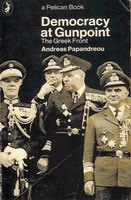 Matt's
Pick! Democracy
at Gunpoint was written by Andreas Papandreou while in
exile during the Junta. It contains a history of Greece, particularly
the relationship with the US. It is a good inside look at Greek
politics and history and makes enjoyable reading, not just
for historical purposes. For those of you who don't know, Papandreou
returned to Greece after the fall of the Junta and became one of
the most popular Prime Ministers in Greek History. Matt's
Pick! Democracy
at Gunpoint was written by Andreas Papandreou while in
exile during the Junta. It contains a history of Greece, particularly
the relationship with the US. It is a good inside look at Greek
politics and history and makes enjoyable reading, not just
for historical purposes. For those of you who don't know, Papandreou
returned to Greece after the fall of the Junta and became one of
the most popular Prime Ministers in Greek History.
|
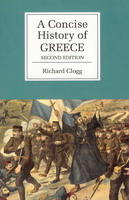 Matt's
Pick! A
Concise History of Greece by Richard Clogg is one of
the best books on modern Greece and has been translated into a number
of languages including Greek and Turkish. It begins with the first
stirrings of what was to be the Revolution of 1821 and goes all
the way to the present day. Well written and some terrific photos
and illustrations. Clogg was one of my main sources and his time-line
and biographies were very helpful. The best way I can think of to
thank him is to recommend that anyone interested in modern Greek
history buy this book. Matt's
Pick! A
Concise History of Greece by Richard Clogg is one of
the best books on modern Greece and has been translated into a number
of languages including Greek and Turkish. It begins with the first
stirrings of what was to be the Revolution of 1821 and goes all
the way to the present day. Well written and some terrific photos
and illustrations. Clogg was one of my main sources and his time-line
and biographies were very helpful. The best way I can think of to
thank him is to recommend that anyone interested in modern Greek
history buy this book.
|
|
 Matt's
Pick! Inside
Hitler's Greece: The Experience of Occupation 1941-1944 by
Mark Mazower is the best book on wartime Greece and maybe the
best book on Greek History. I read it twice. I don't even see movies
twice. Indispensable for my Greece History web-site with lots of
interesting photos it covers all the different aspects of
the occupation and paints a very vivid and frightening picture. Matt's
Pick! Inside
Hitler's Greece: The Experience of Occupation 1941-1944 by
Mark Mazower is the best book on wartime Greece and maybe the
best book on Greek History. I read it twice. I don't even see movies
twice. Indispensable for my Greece History web-site with lots of
interesting photos it covers all the different aspects of
the occupation and paints a very vivid and frightening picture.
|
 Matt's
Pick! Greece:
The Modern Sequel-From 1831 to the Present by John S. Koliopoulos
and Thanos M Veremis is written thematically rather than chronologically
but it covers all the bases from history, politics, the economy,
ideology, culture, music, film, poetry, art and foremost the Greek
people themselves. If I had used as much information from this
book as I wanted to my History of Greece site would have been
five thousand pages long. Matt's
Pick! Greece:
The Modern Sequel-From 1831 to the Present by John S. Koliopoulos
and Thanos M Veremis is written thematically rather than chronologically
but it covers all the bases from history, politics, the economy,
ideology, culture, music, film, poetry, art and foremost the Greek
people themselves. If I had used as much information from this
book as I wanted to my History of Greece site would have been
five thousand pages long.
|
|
American Accounts Documenting the Destruction of Smyrna by the Kemalist Turkish Forces, September 1922 by Constantine G. Hatzidimitriou (Editor)
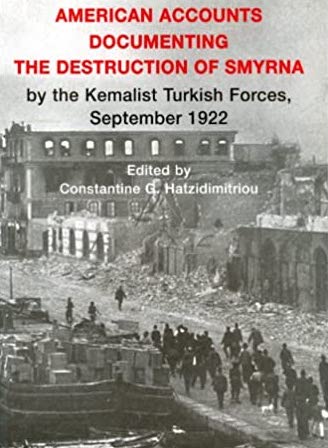 In September, 1922, the thriving, cosmopolitan city of Smyrna was captured and put to the torch by Turkish forces, led by Mustafa Kemal Ataturk. This was the culmination of a war that resulted in the transformation of the Ottoman Empire into the modern Turkish state. The destruction of the middle class Greek and Armenian quarters of the city,
and the slaughter or expulsion of its inhabitants, represented the final seal of Turkish dominion. The "Progressive" Kemalist secular state-building ideology in part was the child of Bolshevik, proto-facist and radicalist influences. It assumed that the construction of modern Turkish identity required religious, ethnic and even "racial" uniformity. For this reason genocide and the expulsion of heterogeneous, especially middle class and Christian, groups was an integral element and underlying
principle of the Turkish modernization reform process. The governments that succeeded that of Ataturk, including the present secular "democracy," continued to subscribe to this principle (witness the effort to crush Kurdish identity over the last two decades). However, the exigencies of dealing with western liberal democracies required that another reality be superimposed: Turkish regimes hence founded an entire industry to deny the genocides of the Armenians, of the Pontians and other Greeks, even
that of smaller religious or ethnic groups such as the Arab Nestorian Christians. The destruction and burning of Smyrna became one of the first projects of systematic denial by Turkish governments. The evidence in this book includes official U.S. State Department documents, press and other eye witness accounts that testify regarding the details of ethnic persecution. The reality they project must be contraposed to that promoted by the present Turkish regime and its mercenary propagandists in Washington and elsewhere.
Buy on Amazon In September, 1922, the thriving, cosmopolitan city of Smyrna was captured and put to the torch by Turkish forces, led by Mustafa Kemal Ataturk. This was the culmination of a war that resulted in the transformation of the Ottoman Empire into the modern Turkish state. The destruction of the middle class Greek and Armenian quarters of the city,
and the slaughter or expulsion of its inhabitants, represented the final seal of Turkish dominion. The "Progressive" Kemalist secular state-building ideology in part was the child of Bolshevik, proto-facist and radicalist influences. It assumed that the construction of modern Turkish identity required religious, ethnic and even "racial" uniformity. For this reason genocide and the expulsion of heterogeneous, especially middle class and Christian, groups was an integral element and underlying
principle of the Turkish modernization reform process. The governments that succeeded that of Ataturk, including the present secular "democracy," continued to subscribe to this principle (witness the effort to crush Kurdish identity over the last two decades). However, the exigencies of dealing with western liberal democracies required that another reality be superimposed: Turkish regimes hence founded an entire industry to deny the genocides of the Armenians, of the Pontians and other Greeks, even
that of smaller religious or ethnic groups such as the Arab Nestorian Christians. The destruction and burning of Smyrna became one of the first projects of systematic denial by Turkish governments. The evidence in this book includes official U.S. State Department documents, press and other eye witness accounts that testify regarding the details of ethnic persecution. The reality they project must be contraposed to that promoted by the present Turkish regime and its mercenary propagandists in Washington and elsewhere.
Buy on Amazon
|
|
The Forgotten Heroes of the Balkan Wars: Greek-Americans and Philhellenes 1912-1913
by Peter S. Giakoumis
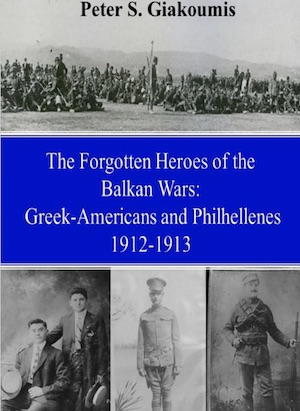 The Balkan Wars of 1912-1913, the precursors to WWI, have been all but forgotten. The Greek-American and Philhellene contributions are overlooked, and yet their efforts and participation are part of the greatest untold stories, until now. Historian Peter S. Giakoumis presents for the first time the unique perspective of the Greek-Americans and their
supporters. Using contemporary newspaper reports, letters from the front, official narratives, and private archives, their story is now resurrected and gives those heroes and heroines their rightful place in history. The Balkan Wars of 1912-1913, the precursors to WWI, have been all but forgotten. The Greek-American and Philhellene contributions are overlooked, and yet their efforts and participation are part of the greatest untold stories, until now. Historian Peter S. Giakoumis presents for the first time the unique perspective of the Greek-Americans and their
supporters. Using contemporary newspaper reports, letters from the front, official narratives, and private archives, their story is now resurrected and gives those heroes and heroines their rightful place in history.
“Greece’s participation in the Balkan Wars produced some of the most glorious pages in its modern history. Although initially considered an outsider, its amazing victories led to the doubling of its territory and population, liberating Hellenes all the way from the Aegean Archipelago to Macedonia, and from Epirus to Thrace. From the outcome, it became clear that Greece, victorious in both wars, was now a force with which to be reckoned. This experience can also
be credited with infusing the national identity with the courage and inspiration to perform singular acts of heroism—like securing the world’s first victory over the Axis in WWII and spreading hope where none existed. The value of this book lies in its capturing of the momentous contribution of Greek-Americans, who temporarily set aside their pursuit of the American dream and made all sorts of sacrifices to aid their homeland in this monumental struggle. Their heroism on the storied battlefields where their ancient
ancestors once distinguished themselves helped shape the fate of modern Greece.” Excerpt from the Foreword by professor Christopher Tripoulas
Order from Amazon
|
|
Four's Destiny: A Wartime Greek Tragedy by Michael Powell
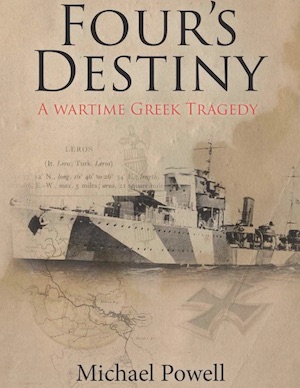 “Four’s Destiny” melds real historical events in the period 1912-1943 with a fictional account of the short lives of four young men caught up in the maelstrom of war. At its core is the Greek Dodecanese island of Leros, the site of a largely unknown battle in World War II. The destinies of the four overlap tragically in
that battle as the Italian nation overthrows Mussolini and casts in its lot with the Allies against the Nazis. “Four’s Destiny” melds real historical events in the period 1912-1943 with a fictional account of the short lives of four young men caught up in the maelstrom of war. At its core is the Greek Dodecanese island of Leros, the site of a largely unknown battle in World War II. The destinies of the four overlap tragically in
that battle as the Italian nation overthrows Mussolini and casts in its lot with the Allies against the Nazis.
"A very welcome addition to the range of authoritative historical texts on the subject of the Battle of Leros, Four's Destiny takes a slightly different approach. This is a very readable fact based novel demonstrating a mastery of all of the relevant historical facts and cultural dimensions allowing the author to intricately weave a kaleidoscopic timeline of the aftermath of World War I in the UK, Germany, Italy and Greece and the impact this had on the lives
of the four main characters
(Godfrey, Rolf, Marci and Yiannis) and their families. Their common Destiny leads them to the opening of the Battle of Leros. Very difficult to put down and now about to be read for a second time. Highly recommended. PS - If anyone from Hollywood is looking for a film script on Leros, this may just be it! " Simon C. See Michael Powell's Website for Ordering Information.
|
|
 Ionian
Vision: Greece in Asia Minor 1919-1922 by Michael Llewellyn
Smith is a very readable history of the dream of a greater
Greece in Asia Minor and the tragedy known as the Asia Minor Disaster,
the Greek army's defeat at the hands of the Nationalist Turks, the
burning of Smyrna and the refugee crisis that changed life in Greece
forever. Indispensable reading for anyone who wants to understand
20th century Greece. Ionian
Vision: Greece in Asia Minor 1919-1922 by Michael Llewellyn
Smith is a very readable history of the dream of a greater
Greece in Asia Minor and the tragedy known as the Asia Minor Disaster,
the Greek army's defeat at the hands of the Nationalist Turks, the
burning of Smyrna and the refugee crisis that changed life in Greece
forever. Indispensable reading for anyone who wants to understand
20th century Greece.
|
|
|

|
|
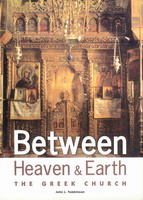 Matt's
Pick! Between
Heaven and Earth: The Greek Church by John Tomkinson
is an introduction to the Greek Orthodox religion, a faith as old
as Christianity itself. The book contains a history of the Greek
Church from the apostles to the present day as well as the services,
festivals, faith, the government and the churches themselves and
their furnishings. Hundreds of photos, discussions of the symbolism
of icons and a visit to the Monastic Republic of Mount Athos makes
this one of the most important books on the Greek Church in the
English language. You can order this book directly from the author at anagnosis@anagnosis.gr or use the search box to order from Amazon. Matt's
Pick! Between
Heaven and Earth: The Greek Church by John Tomkinson
is an introduction to the Greek Orthodox religion, a faith as old
as Christianity itself. The book contains a history of the Greek
Church from the apostles to the present day as well as the services,
festivals, faith, the government and the churches themselves and
their furnishings. Hundreds of photos, discussions of the symbolism
of icons and a visit to the Monastic Republic of Mount Athos makes
this one of the most important books on the Greek Church in the
English language. You can order this book directly from the author at anagnosis@anagnosis.gr or use the search box to order from Amazon.
|
 Matt's
Pick! Traveller's
Greece: Memories of an Enchanted Land is a compilation by John
L Tomkinson of over one hundred different impressions written
by travelers to Greece over the last three centuries. Some of these
are very rare works, written by well-known and unknown writers,
artists, poets and adventurers including Herman Melville, Edward
Lear, Mark Twain, and James Theodore Bent. This is an anthology
that anyone who loves Greece or travel or history can read from
cover to cover and makes an excellent companion for actual traveling.
You can order this book directly from the author at anagnosis@anagnosis.gr or use the search box to order from Amazon. Matt's
Pick! Traveller's
Greece: Memories of an Enchanted Land is a compilation by John
L Tomkinson of over one hundred different impressions written
by travelers to Greece over the last three centuries. Some of these
are very rare works, written by well-known and unknown writers,
artists, poets and adventurers including Herman Melville, Edward
Lear, Mark Twain, and James Theodore Bent. This is an anthology
that anyone who loves Greece or travel or history can read from
cover to cover and makes an excellent companion for actual traveling.
You can order this book directly from the author at anagnosis@anagnosis.gr or use the search box to order from Amazon.
|
|
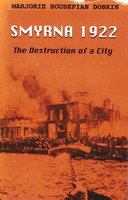 Matt's
Pick! Smyrna
1922: The Destruction of a City by Marjorie Housepian Dobkin
is a the first account of what happened in one of the world's worst
human tragedies, the burning of Smyrna and the murder of its Christian
population by Mustapha Kemal (Ataturk) while the allies just watched
and afterwards took part in a massive cover-up that continues to
this day. Using diaries, letters and eye-witness accounts it is
a meticulously documented chronicle of the tragedy. A very powerful
book that reads like a novel. You can't put it down. Matt's
Pick! Smyrna
1922: The Destruction of a City by Marjorie Housepian Dobkin
is a the first account of what happened in one of the world's worst
human tragedies, the burning of Smyrna and the murder of its Christian
population by Mustapha Kemal (Ataturk) while the allies just watched
and afterwards took part in a massive cover-up that continues to
this day. Using diaries, letters and eye-witness accounts it is
a meticulously documented chronicle of the tragedy. A very powerful
book that reads like a novel. You can't put it down.
|
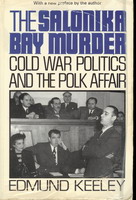 The
Salonica Bay Murders: Cold War Politics and the Polk Affair
by Edmund Keeley, one of the finest writers of modern Greek
literature, is a penetrating enquiry into the murder of American
Journalist George Polk during the Greek Civil War and the torture
and conviction of a leftist journalist that involved Greek, American
and British government officials. It is a powerfully written piece
of historical detective work that leaves the reader shaking his
head in wonder at how far these governments were willing
to go in the war against communism. The
Salonica Bay Murders: Cold War Politics and the Polk Affair
by Edmund Keeley, one of the finest writers of modern Greek
literature, is a penetrating enquiry into the murder of American
Journalist George Polk during the Greek Civil War and the torture
and conviction of a leftist journalist that involved Greek, American
and British government officials. It is a powerfully written piece
of historical detective work that leaves the reader shaking his
head in wonder at how far these governments were willing
to go in the war against communism.
|
|
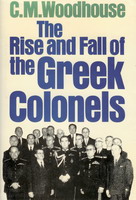 The
Rise and Fall of the Greek Colonels by CM Woodhouse chronicles
the last days of civilian rule and follows the April 21 1967 Junta
from its beginning to its final collapse in 1974. Analysing
international reactions and the United States role in the coup
this is about as much detailed information as you can get in one
book on this dark period in Greece's history. Woodhouse has written
a number of other highly acclaimed books on Greece and is one of
the most respected writers of modern Greek history. The
Rise and Fall of the Greek Colonels by CM Woodhouse chronicles
the last days of civilian rule and follows the April 21 1967 Junta
from its beginning to its final collapse in 1974. Analysing
international reactions and the United States role in the coup
this is about as much detailed information as you can get in one
book on this dark period in Greece's history. Woodhouse has written
a number of other highly acclaimed books on Greece and is one of
the most respected writers of modern Greek history.
|
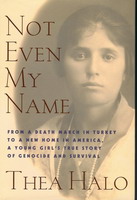 Not
Even My Name by
Thea Halo is an important book about
the genocide of the Greeks of the Pontos region in eastern Turkey.
The book begins in a small Greek village near the Black Sea
where life seems idealic. But when Turkish soldiers knock on the
villagers doors to tell them they have to leave and can take with
them only what they can carry they embark upon a death march that
is the end of the 3000 year history of the Pontian Greeks of Turkey.
This is a rare first-hand account of the horrors of genocide
and a deeply moving portrait of a human being who lives through
the nightmare. Not
Even My Name by
Thea Halo is an important book about
the genocide of the Greeks of the Pontos region in eastern Turkey.
The book begins in a small Greek village near the Black Sea
where life seems idealic. But when Turkish soldiers knock on the
villagers doors to tell them they have to leave and can take with
them only what they can carry they embark upon a death march that
is the end of the 3000 year history of the Pontian Greeks of Turkey.
This is a rare first-hand account of the horrors of genocide
and a deeply moving portrait of a human being who lives through
the nightmare.
|
|
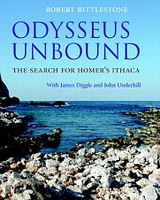 Odysseus Unbound by Robert Bittlestone Odysseus Unbound by Robert Bittlestone
Where is the Ithaca described in such detail in Homer's Odyssey? The
mystery has baffled scholars for over two millennia, particularly because
Homer's descriptions bear little resemblance to the modern island called Ithaki.
This highly illustrated book tells the extraordinary story of the exciting
recent discovery of the true location of Homer's Ithaca by following a detective
trail of literary, geological and archaeological clues. We can now identify all
the places on the island that are mentioned in the epic – even the site of
Odysseus' Palace itself. The pages of the Odyssey come alive as we follow its events through a
landscape that opens up before our eyes via glorious colour photographs and 3D
satellite images. Over a century after Schliemann's discovery of Troy, this
breakthrough will revolutionise our understanding of Homer's texts and of our
cultural ancestors in Bronze Age Greece.
|
|
CRETE: WOMEN, HISTORY, BOOKS AND PLACES by Susanna Hoe
 Once upon a time, Europa emerged from the waves at Matala on the back of a bull – the god Zeus in disguise. There, too, the author broke her ankle as she followed Europa to nearby Gortyn – whose famous law code has much to say about women. Europa was the mother of Minos, of the Minoans, (and of the
concept of ‘Europe’).
Millennia later, Harriet Boyd was the first woman archaeologist to discover and direct her own dig, at Gournia – a perfect Minoan town. This livret links myth and archaeology by writing and place, but does not neglect the island’s other women. Over the centuries they were subject to numerous changes of overlord – Mycenaean, Roman, Byzantine (twice), Saracen, Venetian, Ottoman, German – but somehow have emerged as Cretans. This is the second in the series of small format books (livrets) OF ISLANDS
AND WOMEN. The author’s proposition is this: the most rewarding way for a woman to visit an island is to read books by women who have travelled there, or by or about women who have been part of its history, and to visit the places they describe or where they had their being. Each livret gives hints about which books to read, as well as a flavour of them, and where to go. Itineraries are included, as well as historical background. Most of the information comes from women’s
writing or the experiences of the author and her husband. For ordering info e-mail holobooks@yahoo.co.uk or use the search box to order from Amazon. Once upon a time, Europa emerged from the waves at Matala on the back of a bull – the god Zeus in disguise. There, too, the author broke her ankle as she followed Europa to nearby Gortyn – whose famous law code has much to say about women. Europa was the mother of Minos, of the Minoans, (and of the
concept of ‘Europe’).
Millennia later, Harriet Boyd was the first woman archaeologist to discover and direct her own dig, at Gournia – a perfect Minoan town. This livret links myth and archaeology by writing and place, but does not neglect the island’s other women. Over the centuries they were subject to numerous changes of overlord – Mycenaean, Roman, Byzantine (twice), Saracen, Venetian, Ottoman, German – but somehow have emerged as Cretans. This is the second in the series of small format books (livrets) OF ISLANDS
AND WOMEN. The author’s proposition is this: the most rewarding way for a woman to visit an island is to read books by women who have travelled there, or by or about women who have been part of its history, and to visit the places they describe or where they had their being. Each livret gives hints about which books to read, as well as a flavour of them, and where to go. Itineraries are included, as well as historical background. Most of the information comes from women’s
writing or the experiences of the author and her husband. For ordering info e-mail holobooks@yahoo.co.uk or use the search box to order from Amazon.
|
|
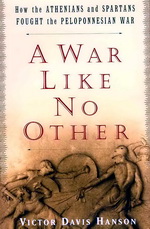 A War Like No Other: One of the most provocative military historians, Victor Davis Hanson has given
us painstakingly researched and pathbreaking accounts of wars ranging from
classical antiquity to the twenty-first century. Now he juxtaposes an ancient
conflict with our most urgent modern concerns to create his most engrossing work
to date, A War Like No Other. Over the course of a generation, the Hellenic
city-states of Athens and Sparta fought a bloody conflict that resulted in the
collapse of Athens and the end of its golden age. Thucydides wrote the standard
history of the Peloponnesian War, which has given readers throughout the ages a
vivid and authoritative narrative. But Hanson offers readers something new: a
complete chronological account that reflects the political background of the
time, the strategic thinking of the combatants, the misery of battle in
multifaceted theaters, and important insight into how these events echo in the
present. Hanson compellingly portrays the ways Athens and Sparta fought on land
and sea, in city and countryside, and details their employment of the full scope
of conventional and nonconventional tactics, from sieges to targeted
assassinations, torture, and terrorism. He also assesses the crucial roles
played by warriors such as Pericles and Lysander, artists, among them
Aristophanes, and thinkers including Sophocles and Plato. Hanson's perceptive
analysis of events and personalities raises many thought-provoking questions:
Were Athens and Sparta like America and Russia, two superpowers battling to the
death? Is the Peloponnesian War echoed in the endless, frustrating conflicts of
Vietnam, Northern Ireland, and the current Middle East? Or was it morelike
America's own Civil War, a brutal rift that rent the fabric of a glorious
society, or even this century's " red state-- blue state" schism between
liberals and conservatives, a cultural war that manifestly controls military
policies? Hanson daringly brings the facts to life and unearths the often
surprising ways in which the past informs the present. Brilliantly researched,
dynamically written, A War Like No Other is like no other history of this
important war. A War Like No Other: One of the most provocative military historians, Victor Davis Hanson has given
us painstakingly researched and pathbreaking accounts of wars ranging from
classical antiquity to the twenty-first century. Now he juxtaposes an ancient
conflict with our most urgent modern concerns to create his most engrossing work
to date, A War Like No Other. Over the course of a generation, the Hellenic
city-states of Athens and Sparta fought a bloody conflict that resulted in the
collapse of Athens and the end of its golden age. Thucydides wrote the standard
history of the Peloponnesian War, which has given readers throughout the ages a
vivid and authoritative narrative. But Hanson offers readers something new: a
complete chronological account that reflects the political background of the
time, the strategic thinking of the combatants, the misery of battle in
multifaceted theaters, and important insight into how these events echo in the
present. Hanson compellingly portrays the ways Athens and Sparta fought on land
and sea, in city and countryside, and details their employment of the full scope
of conventional and nonconventional tactics, from sieges to targeted
assassinations, torture, and terrorism. He also assesses the crucial roles
played by warriors such as Pericles and Lysander, artists, among them
Aristophanes, and thinkers including Sophocles and Plato. Hanson's perceptive
analysis of events and personalities raises many thought-provoking questions:
Were Athens and Sparta like America and Russia, two superpowers battling to the
death? Is the Peloponnesian War echoed in the endless, frustrating conflicts of
Vietnam, Northern Ireland, and the current Middle East? Or was it morelike
America's own Civil War, a brutal rift that rent the fabric of a glorious
society, or even this century's " red state-- blue state" schism between
liberals and conservatives, a cultural war that manifestly controls military
policies? Hanson daringly brings the facts to life and unearths the often
surprising ways in which the past informs the present. Brilliantly researched,
dynamically written, A War Like No Other is like no other history of this
important war.
|
|
Greece: Biography of a Modern Nation
by Roderick Beaton
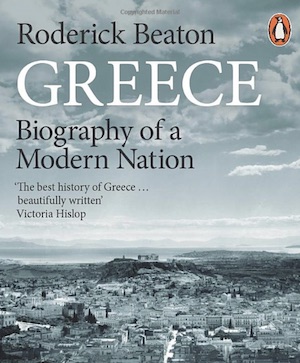 We think we know ancient Greece, the civilisation that shares the same name and gave us just about everything that defines 'western' culture today, in the arts, sciences, social sciences and politics. Yet, as Greece has been brought under repeated scrutiny during the financial crises that have convulsed the country since 2010, worldwide coverage has revealed just how poorly we grasp the modern nation. This book sets out to understand the modern Greeks on their own terms. We think we know ancient Greece, the civilisation that shares the same name and gave us just about everything that defines 'western' culture today, in the arts, sciences, social sciences and politics. Yet, as Greece has been brought under repeated scrutiny during the financial crises that have convulsed the country since 2010, worldwide coverage has revealed just how poorly we grasp the modern nation. This book sets out to understand the modern Greeks on their own terms.
How did Greece come to be so powerfully attached to the legacy of the ancients in the first place, and then define an identity for themselves that is at once Greek and modern? This book reveals the remarkable achievement, during the last 300 years, of building a modern nation on, sometimes literally, the ruins of a vanished civilisation. This is the story of the Greek nation-state but also, and perhaps more fundamentally, of the collective identity that goes with it. It is not only a history of events and high politics, it is also a history of culture, of the arts, of people and of ideas.
'The best history of Greece around... Beautifully written and packed with insights about the culture and the people. I will be dipping into this book for the rest of my life' -Victoria Hislop
|
|
|
|
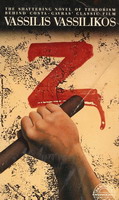 Z
by Vasslis Vassilikos
is based on the political assassination of celebrated Greek patriot,
member of parliament and pacifist Grigoris Lambrakis in 1963 and
the investigation by a courageous attorney who follows the trail
to the highest level of the Greek police and government. This is
a fascinating novel that was banned in Greece during the Junta. It
was later made into a movie by Costa-Gavras that is still considered
one of the best political thrillers ever made. The murder of Lambrakis
was one of the most important events in the history of modern Greece. Z
by Vasslis Vassilikos
is based on the political assassination of celebrated Greek patriot,
member of parliament and pacifist Grigoris Lambrakis in 1963 and
the investigation by a courageous attorney who follows the trail
to the highest level of the Greek police and government. This is
a fascinating novel that was banned in Greece during the Junta. It
was later made into a movie by Costa-Gavras that is still considered
one of the best political thrillers ever made. The murder of Lambrakis
was one of the most important events in the history of modern Greece.
|
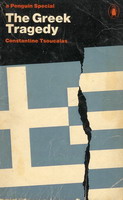 The
Greek Tragedy by
Constantine Tsoucalas was one of the
first books I ever read on modern Greek History. Published in 1969
the book is a history of modern Greece written during the Junta
by a lawyer and sociologist living in Paris. It is able to portray
the anguish of the military dictatorship and provides an explanation
in the context of Greek History. When I read this book in 1974 the
Junta was still in power. It was the beginning of my interest in
modern Greek history. Amazingly it is still available at Amazon. The
Greek Tragedy by
Constantine Tsoucalas was one of the
first books I ever read on modern Greek History. Published in 1969
the book is a history of modern Greece written during the Junta
by a lawyer and sociologist living in Paris. It is able to portray
the anguish of the military dictatorship and provides an explanation
in the context of Greek History. When I read this book in 1974 the
Junta was still in power. It was the beginning of my interest in
modern Greek history. Amazingly it is still available at Amazon.
|
|
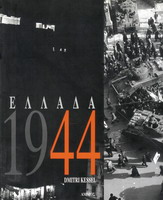 Ellada
1944 by photo-journalist Dmitri Kessel is a book of photographs
that begin with the end of the Nazi occupation and continues with
the massacre of leftist demonstrators in Syntagma square and
through the first year of the Greek Civil War. There are portraits
of leaders including Aris Velouchiotis, Giorgios Papandreou, Archbishop
Damaskinos, Winston Churchill and photos of Athens street scenes,
British troops fighting from the Acropolis and unbelievably sad
photos of a truly tragic period. Out of print and hard to find.
Try nikos@ammosbooks.gr or use the search box to order from Amazon. Ellada
1944 by photo-journalist Dmitri Kessel is a book of photographs
that begin with the end of the Nazi occupation and continues with
the massacre of leftist demonstrators in Syntagma square and
through the first year of the Greek Civil War. There are portraits
of leaders including Aris Velouchiotis, Giorgios Papandreou, Archbishop
Damaskinos, Winston Churchill and photos of Athens street scenes,
British troops fighting from the Acropolis and unbelievably sad
photos of a truly tragic period. Out of print and hard to find.
Try nikos@ammosbooks.gr or use the search box to order from Amazon.
|
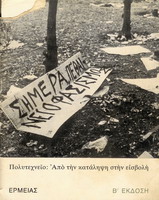 Today
Fascism Dies: The Politechnic- From the Occupation to the Invasion
is a book of photos published in 1974 which is almost a minute to
minute photographic account of the student demonstrations at the
Politechnic University of Athens leading up to the Junta crushing
the rebellion when a tank crashes through the gates of the school.
With hundreds of photos from Wednesday Nov. 14th to Monday Nov.
19th this book is a collectors item. Where can you get it? Probably
nowhere but you may get lucky if you check every used bookstore
in the free world. Today
Fascism Dies: The Politechnic- From the Occupation to the Invasion
is a book of photos published in 1974 which is almost a minute to
minute photographic account of the student demonstrations at the
Politechnic University of Athens leading up to the Junta crushing
the rebellion when a tank crashes through the gates of the school.
With hundreds of photos from Wednesday Nov. 14th to Monday Nov.
19th this book is a collectors item. Where can you get it? Probably
nowhere but you may get lucky if you check every used bookstore
in the free world.
|
|
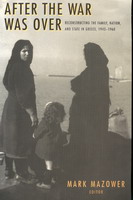 After
the War Was Over: Reconstructing the Family, Nation and State in
Greece, 1943-1960 is a collection of
essays edited by Mark Mazower
that discusses the tragedy of Greece in the war and postwar years,
a period when the country grappled with foreign occupation, civil
conflict and was the front line in the Cold War. With chapters on
the Jewish survivors of Thessaloniki, the punishment of collaborators,
leftist violence, the children who grew up during the war and other
subjects make this an important contribution to understanding this
period and the Greece of today. After
the War Was Over: Reconstructing the Family, Nation and State in
Greece, 1943-1960 is a collection of
essays edited by Mark Mazower
that discusses the tragedy of Greece in the war and postwar years,
a period when the country grappled with foreign occupation, civil
conflict and was the front line in the Cold War. With chapters on
the Jewish survivors of Thessaloniki, the punishment of collaborators,
leftist violence, the children who grew up during the war and other
subjects make this an important contribution to understanding this
period and the Greece of today.
|
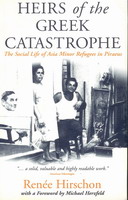 Heirs
of the Greek Catastrophe : The Social Life of Asia Minor Refugees
in Pireaus by
Renee Hirschon follows a large group
of the one million Christians who were expelled from Turkey after the
defeat of the Greek army and burning of Smyrna, to the urban
quarter of Kokkinia in Pireaus. This is one of the few in-depth
studies of a refugee community and how the Greeks of Asia Minor,
though they have lived in Athens for three quarters of a century,
still maintain a separate sense of identity from the mainland Greeks.
Well written and fascinating. Heirs
of the Greek Catastrophe : The Social Life of Asia Minor Refugees
in Pireaus by
Renee Hirschon follows a large group
of the one million Christians who were expelled from Turkey after the
defeat of the Greek army and burning of Smyrna, to the urban
quarter of Kokkinia in Pireaus. This is one of the few in-depth
studies of a refugee community and how the Greeks of Asia Minor,
though they have lived in Athens for three quarters of a century,
still maintain a separate sense of identity from the mainland Greeks.
Well written and fascinating.
|
|
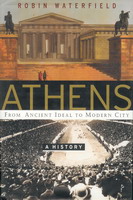 Athens:
From Ancient Ideal to Modern City by
Robin Waterfield is an epic story that
begins in the Classical period and follows the transformation of
Athens through the Macedonian, Roman, Byzantine, Frankish and Ottoman
periods all the way to the present day. It is a fascinating look
at an extraordinary city and is a valuable tool in understanding
the Athens of today. Robin Waterfield has translated a number of
the ancient Greek classics including Plato, Herodotus, Euripides
and Plutarch. Athens:
From Ancient Ideal to Modern City by
Robin Waterfield is an epic story that
begins in the Classical period and follows the transformation of
Athens through the Macedonian, Roman, Byzantine, Frankish and Ottoman
periods all the way to the present day. It is a fascinating look
at an extraordinary city and is a valuable tool in understanding
the Athens of today. Robin Waterfield has translated a number of
the ancient Greek classics including Plato, Herodotus, Euripides
and Plutarch.
|
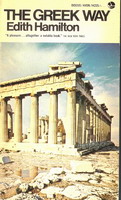 The
Greek Way by Edith Hamilton was published in 1930. This was the
first book written by Miss Hamilton, a student of the classics who
had read Greek and Latin all her life. She wrote it when she was
63! Based on a thorough knowledge of ancient Greek history, philosophy,
art and literature this book is simply a good old-fashioned history of Greek culture.
Hamilton points out that the Athenians eventually fell because they denied to others the freedom they claimed for
themselves, and corrupted by power their world collapsed when they stretched
their empire to thinly and made too many enemies. Ominous The
Greek Way by Edith Hamilton was published in 1930. This was the
first book written by Miss Hamilton, a student of the classics who
had read Greek and Latin all her life. She wrote it when she was
63! Based on a thorough knowledge of ancient Greek history, philosophy,
art and literature this book is simply a good old-fashioned history of Greek culture.
Hamilton points out that the Athenians eventually fell because they denied to others the freedom they claimed for
themselves, and corrupted by power their world collapsed when they stretched
their empire to thinly and made too many enemies. Ominous
|
|
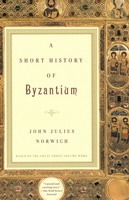 A
Short History of Byzantium by
John Julius Norwich is actually an adaptation
of his massive three volume History of Byzantium. Beginning in 330
AD when Constantine the Great makes Christianity the religion of
the realm and transfers the capital to the city of Byzantium which
becomes Constantinople the book follows eleven centuries of warfare,
politics, theology and art, encountering mystics, philosophers,
eunuchs, barbarians and saints. One of the best historical narratives
ever written and certainly a must-read for anyone interested in
the Byzantine empire or Christianity for that matter. A
Short History of Byzantium by
John Julius Norwich is actually an adaptation
of his massive three volume History of Byzantium. Beginning in 330
AD when Constantine the Great makes Christianity the religion of
the realm and transfers the capital to the city of Byzantium which
becomes Constantinople the book follows eleven centuries of warfare,
politics, theology and art, encountering mystics, philosophers,
eunuchs, barbarians and saints. One of the best historical narratives
ever written and certainly a must-read for anyone interested in
the Byzantine empire or Christianity for that matter.
|
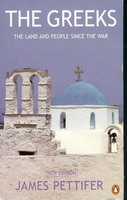 The
Greeks: The Land and People Since the War by
James Pettifer is a classic survey of
the roots of Greek social, economic, and political realities and
a useful introduction to anyone who wants to go beyond the Greek
stereotypes. With chapters on PASOK, tourism, archaeology, language,
food, the family, the environment, Albanians and other minorities
it is the kind of book that might piss you off if you are Greek,
if you did not agree with most of what he writes. Pettifer has the
classic love/hate relationship with Greece. If you do too you may
want to read it. The
Greeks: The Land and People Since the War by
James Pettifer is a classic survey of
the roots of Greek social, economic, and political realities and
a useful introduction to anyone who wants to go beyond the Greek
stereotypes. With chapters on PASOK, tourism, archaeology, language,
food, the family, the environment, Albanians and other minorities
it is the kind of book that might piss you off if you are Greek,
if you did not agree with most of what he writes. Pettifer has the
classic love/hate relationship with Greece. If you do too you may
want to read it.
|
|
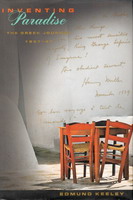 Inventing
Paradise by
Edmund Keeley is part cultural history,
part literary criticism, part personal memoir that captures modern
Greece before, during and after the Second World War. In it we come
face to face with such literary heroes as Henry Miller, Lawrence
Durrell, George Seferis and the Colossus of Marousi himself , George
Katsimbalis. These characters and others spend evenings in tavernas,
and explore Greece in an extraordinary time. Perhaps Keeley's best
work and a must for any fans of these writers or people who wished
they could have experienced Greece in a romantic time on the eve
of catastrophe. Inventing
Paradise by
Edmund Keeley is part cultural history,
part literary criticism, part personal memoir that captures modern
Greece before, during and after the Second World War. In it we come
face to face with such literary heroes as Henry Miller, Lawrence
Durrell, George Seferis and the Colossus of Marousi himself , George
Katsimbalis. These characters and others spend evenings in tavernas,
and explore Greece in an extraordinary time. Perhaps Keeley's best
work and a must for any fans of these writers or people who wished
they could have experienced Greece in a romantic time on the eve
of catastrophe.
|
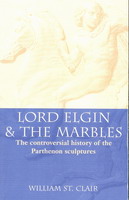 Lord
Elgin and the Marbles: The Controversial History of the Parthenon
Sculptures by
William St. Clair is an authoritative
account of the extraordinary circumstances in which the Elgin Marbles
were acquired from the Turks during their occupation of Greece and
the tremendous impact they had on the appreciation of Greek art
all over Europe. I bought this book in the British Museum when I
went to see the Parthenon Marbles and bought the book because it
seemed like the responsible thing to do if I was going to write
about them. I expected it to be a chore which it was not. This is
enjoyable reading and a window not just on Lord Elgin and his motives
but Greece and London during this period. Lord
Elgin and the Marbles: The Controversial History of the Parthenon
Sculptures by
William St. Clair is an authoritative
account of the extraordinary circumstances in which the Elgin Marbles
were acquired from the Turks during their occupation of Greece and
the tremendous impact they had on the appreciation of Greek art
all over Europe. I bought this book in the British Museum when I
went to see the Parthenon Marbles and bought the book because it
seemed like the responsible thing to do if I was going to write
about them. I expected it to be a chore which it was not. This is
enjoyable reading and a window not just on Lord Elgin and his motives
but Greece and London during this period.
|
|
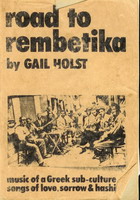 Road
to Rembetika: Music of a Greek Sub-Culture, Songs of Love, Sorrow
and Hashish by
Gail Holst is the best book on the Greek
Urban Blues in English and as you can tell by state of the cover
my copy has seen a lot of use. Loaded with historic photos, historical
and biographical information on the musicians and Greek society
from the twenties to the fifties, translated lyrics and lots
more this book helped me appreciate rembetika music enough to listen
to it for the rest of my life. Road
to Rembetika: Music of a Greek Sub-Culture, Songs of Love, Sorrow
and Hashish by
Gail Holst is the best book on the Greek
Urban Blues in English and as you can tell by state of the cover
my copy has seen a lot of use. Loaded with historic photos, historical
and biographical information on the musicians and Greek society
from the twenties to the fifties, translated lyrics and lots
more this book helped me appreciate rembetika music enough to listen
to it for the rest of my life.
|
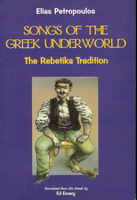 Songs
of the Greek Underworld: The Rebetika Tradition
is Ed Emery's
translation of the Elias Petropoulos
book. Petropoulos is a free-thinking poet, collector of songs and
an expert in the ways of the Greeks who was put in prison by
the Greek Junta for his massive book Rembetika Tragoudia. Songs
of the Greek Underworld explains the history of the music, breaks
down the rhythms and metric patterns and includes the lyrics, music and
a number of photographs and drawings. Until Emery finishes the translation
of Rembetika Tragoudia this book should hold you over. Songs
of the Greek Underworld: The Rebetika Tradition
is Ed Emery's
translation of the Elias Petropoulos
book. Petropoulos is a free-thinking poet, collector of songs and
an expert in the ways of the Greeks who was put in prison by
the Greek Junta for his massive book Rembetika Tragoudia. Songs
of the Greek Underworld explains the history of the music, breaks
down the rhythms and metric patterns and includes the lyrics, music and
a number of photographs and drawings. Until Emery finishes the translation
of Rembetika Tragoudia this book should hold you over.
|
|
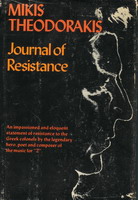 Journal
of Resistance by
Mikis Theodorakis was published in France
in 1971 while the Junta was still in power in Greece. Greece's most
famous composer describes his three year ordeal from going underground
to his arrest, imprisonment, internal exile and internment to the
negotiations that enabled him to leave Greece for France. Theodorakis
has always embraced just causes and has shown great courage
and patriotism. The book is a journal of events and his thoughts
during this period of the life of a man who is a living symbol
of resistance to tyranny. Journal
of Resistance by
Mikis Theodorakis was published in France
in 1971 while the Junta was still in power in Greece. Greece's most
famous composer describes his three year ordeal from going underground
to his arrest, imprisonment, internal exile and internment to the
negotiations that enabled him to leave Greece for France. Theodorakis
has always embraced just causes and has shown great courage
and patriotism. The book is a journal of events and his thoughts
during this period of the life of a man who is a living symbol
of resistance to tyranny.
|
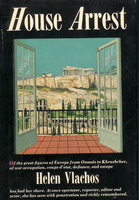 House
Arrest by
Helen Vlachos is another book about
the events of 1967, written by the daughter of one of Greece's best
known journalists George Vlachos. Helen was the publisher of the
daily Kathimerini and the only newspaper owner who refused to publish
under censorship. Because of this she was imprisoned by the dictatorship
until she was able to escape to England where she published the
book in 1970. The book is about her experience under the junta but
also contains recollections of the occupation and the civil war. House
Arrest by
Helen Vlachos is another book about
the events of 1967, written by the daughter of one of Greece's best
known journalists George Vlachos. Helen was the publisher of the
daily Kathimerini and the only newspaper owner who refused to publish
under censorship. Because of this she was imprisoned by the dictatorship
until she was able to escape to England where she published the
book in 1970. The book is about her experience under the junta but
also contains recollections of the occupation and the civil war.
|
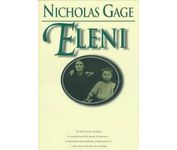 Eleni by Nicholas Gage is a personal history and the story of the heroism of Gage's mother who sacrificed her life to save her children during the civil war when their village of Lia, near the Albanian border, was under the control of the communists. If Eleni is not the best selling Greek book after the Illiad and the Odyssey I would be surprised. It is a facinating
book, written
with passion and love and able to evoke these emotions in the reader. The movie I thought was disappointing and even if you have seen it and feel like you know the story I still urge you to read this book. It is very powerful and if you are not familiar with this period of Greek history, a real eye-opener. Eleni by Nicholas Gage is a personal history and the story of the heroism of Gage's mother who sacrificed her life to save her children during the civil war when their village of Lia, near the Albanian border, was under the control of the communists. If Eleni is not the best selling Greek book after the Illiad and the Odyssey I would be surprised. It is a facinating
book, written
with passion and love and able to evoke these emotions in the reader. The movie I thought was disappointing and even if you have seen it and feel like you know the story I still urge you to read this book. It is very powerful and if you are not familiar with this period of Greek history, a real eye-opener. |
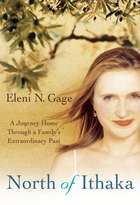 North of Ithaka by Eleni Gage should probably be in another section other than history but because it is in a way a continuation of her father Nicholas Gage's book, I have it listed here. Its about Eleni's return to the village where her grandmother was murdered during the Greek civil war and her efforts to restore the house. "Part personal memoir,
do-it-yourself-manual,
historical novel, family saga, and
tourist guide, North of Ithaka tells of Gage's attempt to put her cultural
confusion to rest by exchanging the skyscrapers of New York for the mountaintops
of her ancestral village." North of Ithaka by Eleni Gage should probably be in another section other than history but because it is in a way a continuation of her father Nicholas Gage's book, I have it listed here. Its about Eleni's return to the village where her grandmother was murdered during the Greek civil war and her efforts to restore the house. "Part personal memoir,
do-it-yourself-manual,
historical novel, family saga, and
tourist guide, North of Ithaka tells of Gage's attempt to put her cultural
confusion to rest by exchanging the skyscrapers of New York for the mountaintops
of her ancestral village."
---The List (Scotland)
|
|
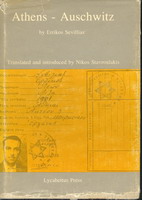 Athens-Auschwitz
by Errikos Sevillias was written by a survivor of the Nazi death camps and found among his papers when he was struck
and killed by a motorcycle in 1974. The book is one of the most heart rendering
and enlightening that I have ever read. It was translated by and features
an introduction by Nikos Stavroulakis, respected author and founder
of the Jewish Museum of Athens. The introduction is a historical
outline of the Jews in Greece. Difficult to find. Athens-Auschwitz
by Errikos Sevillias was written by a survivor of the Nazi death camps and found among his papers when he was struck
and killed by a motorcycle in 1974. The book is one of the most heart rendering
and enlightening that I have ever read. It was translated by and features
an introduction by Nikos Stavroulakis, respected author and founder
of the Jewish Museum of Athens. The introduction is a historical
outline of the Jews in Greece. Difficult to find.
|
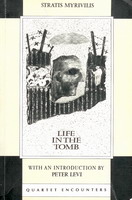 Life
in the Tombs by Stratis Myrivilis is a Greek masterpiece
that has been translated into a dozen different languages, only
recently into English. This is a realistic account of trench warfare
on the Macedonian Front during the First World War written in journal
form by a young intellectual who in the spirit of patriotism and
idealism volunteers to serve on the side of Venizelos and the allies.
This book was banned by the Metaxas regime and during the Nazi occupation. Life
in the Tombs by Stratis Myrivilis is a Greek masterpiece
that has been translated into a dozen different languages, only
recently into English. This is a realistic account of trench warfare
on the Macedonian Front during the First World War written in journal
form by a young intellectual who in the spirit of patriotism and
idealism volunteers to serve on the side of Venizelos and the allies.
This book was banned by the Metaxas regime and during the Nazi occupation.
|
|
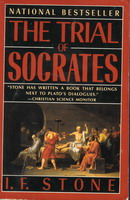 The
Trial of Socrates by I.F. Stone is a classic by one of
America's most well-known and respected journalists. The book is
a fascinating examination of Athenian society and the trial that
led to the death of one of the most brilliant men who ever lived.
Stone argues that while the Athenian verdict cannot be defended, it can be
understood: Socrates was an anti-democratic reactionary whose philosophy posed a
genuine threat to liberal ideals. Whether you agree or not Stone's book is an excellent work to read to
prepare you for reading Plato. The
Trial of Socrates by I.F. Stone is a classic by one of
America's most well-known and respected journalists. The book is
a fascinating examination of Athenian society and the trial that
led to the death of one of the most brilliant men who ever lived.
Stone argues that while the Athenian verdict cannot be defended, it can be
understood: Socrates was an anti-democratic reactionary whose philosophy posed a
genuine threat to liberal ideals. Whether you agree or not Stone's book is an excellent work to read to
prepare you for reading Plato.
|
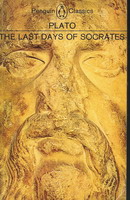 The
Last Days of Socrates by
Plato contains the four works Euthyphro,
The Apology, Crito, and Phaedro which describe the trial and
condemnation of Socrates on charges of heresy and corrupting the
youth of Athens in 399 BC. Plato was probably the most important
thinker in western history and the death of his teacher, Socrates
convinced him that until philosophers became rulers and rulers became
philosophers, there was no hope of curing the ills of society. The
Last Days of Socrates by
Plato contains the four works Euthyphro,
The Apology, Crito, and Phaedro which describe the trial and
condemnation of Socrates on charges of heresy and corrupting the
youth of Athens in 399 BC. Plato was probably the most important
thinker in western history and the death of his teacher, Socrates
convinced him that until philosophers became rulers and rulers became
philosophers, there was no hope of curing the ills of society.
|
|
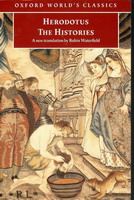 The
Histories by
Herodotus was written by the 'father
of history' "to prevent the traces of human events from being
erased by time". The story centers on the early days of the
Greek city-states and their war against the invading army of the
Persian empire at the beginning of the 5th Century BC. In a battle
that the powerful Persian army vastly outnumbered them, the Greeks
were victorious and thus began the Golden Age of Athens. The book
was finished in 425 BC and is a detailed description of life, people,
animals, plants and pretty much everything. The book was translated
by Robin Waterfield who has translated many
of the ancient classics and also written Athens: A History. The
Histories by
Herodotus was written by the 'father
of history' "to prevent the traces of human events from being
erased by time". The story centers on the early days of the
Greek city-states and their war against the invading army of the
Persian empire at the beginning of the 5th Century BC. In a battle
that the powerful Persian army vastly outnumbered them, the Greeks
were victorious and thus began the Golden Age of Athens. The book
was finished in 425 BC and is a detailed description of life, people,
animals, plants and pretty much everything. The book was translated
by Robin Waterfield who has translated many
of the ancient classics and also written Athens: A History.
|
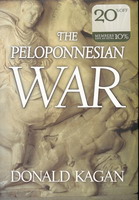 The
Peloponnesian War by Donald Kagan is an account of the
struggle between Athens and Sparta and their allies which led to
the collapse of the Athenian society that had been the fountainhead
of western thought and culture. It was a period of enormous destruction
and loss of life which was written of by Thucydides who was a contemporary
but died before the war ended. Kagan, who has also written
a four volume version on this subject which is considered the
leading scholarly work, paints a picture of the decline of ancient
Greece that is frightening in its similarities to our times. Good
book to have by the side of your bed for when you wake up in the
middle of the night and can't get back to sleep. The
Peloponnesian War by Donald Kagan is an account of the
struggle between Athens and Sparta and their allies which led to
the collapse of the Athenian society that had been the fountainhead
of western thought and culture. It was a period of enormous destruction
and loss of life which was written of by Thucydides who was a contemporary
but died before the war ended. Kagan, who has also written
a four volume version on this subject which is considered the
leading scholarly work, paints a picture of the decline of ancient
Greece that is frightening in its similarities to our times. Good
book to have by the side of your bed for when you wake up in the
middle of the night and can't get back to sleep.
|
|
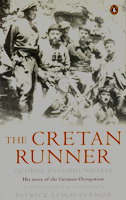 The
Cretan Runner by
George Psychoundakis is the author's
story of his war-time work in the Cretan resistance against the
Germans. His journeys involved smuggling arms and explosives, carrying
vital messages, guiding allied soldiers, agents or commandos through
occupied Crete, all told with humor and humanity. The book is translated
from Greek by Patrick Leigh Fermor and includes a 40 page
introduction by the greatest of the philhellenic writers. This is
an exceptional book and a remarkable story. The
Cretan Runner by
George Psychoundakis is the author's
story of his war-time work in the Cretan resistance against the
Germans. His journeys involved smuggling arms and explosives, carrying
vital messages, guiding allied soldiers, agents or commandos through
occupied Crete, all told with humor and humanity. The book is translated
from Greek by Patrick Leigh Fermor and includes a 40 page
introduction by the greatest of the philhellenic writers. This is
an exceptional book and a remarkable story.
|
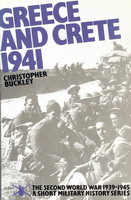 Greece
and Crete 1941 by Christopher Buckley
is one of six books from The Second World War, 1939-1945:
A Short Military History Series in which writers were commissioned
to document events of the war and present them in a readable style
for the general public. This book was originally published towards
the end of the war and reprinted by the Efstathiadis Group in Athens.
It tells the story of what might have been the most courageous stand
by the allies, the defense of Crete and its fall to the Germans. Greece
and Crete 1941 by Christopher Buckley
is one of six books from The Second World War, 1939-1945:
A Short Military History Series in which writers were commissioned
to document events of the war and present them in a readable style
for the general public. This book was originally published towards
the end of the war and reprinted by the Efstathiadis Group in Athens.
It tells the story of what might have been the most courageous stand
by the allies, the defense of Crete and its fall to the Germans.
|
|
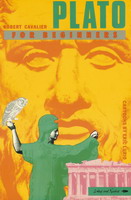 Plato
for Beginners by
Robert Cavalier introduces readers to
the philosopher who helped shape the way we think about the world.
It includes a look at Socrates whose martyrdom led Plato to form
a new system of knowledge based on reason. In this 'documentary
comic book' Plato's life unfolds in a lively and humorous way, teaching
the reader the classic dialogues of the greatest of the Greek philosophers
in a way that is fun for any age. Plato
for Beginners by
Robert Cavalier introduces readers to
the philosopher who helped shape the way we think about the world.
It includes a look at Socrates whose martyrdom led Plato to form
a new system of knowledge based on reason. In this 'documentary
comic book' Plato's life unfolds in a lively and humorous way, teaching
the reader the classic dialogues of the greatest of the Greek philosophers
in a way that is fun for any age.
|
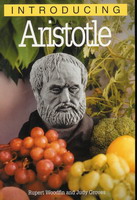 Introducing
Aristotle by Ropert
Woodfin and Judy Groves guides the reader
through an explosion of theories from systematic logic to the earliest
rules of science. Aristotle created or influenced almost every
'ology' in our western culture today and was a big influence
on Islamic philosophy and medieval scholasticism. Like the For
Beginners series, Introducing Aristotle
is a documentary in comic book form and gives the reader a whole
lot of knowledge in an extremely palatable way. Introducing
Aristotle by Ropert
Woodfin and Judy Groves guides the reader
through an explosion of theories from systematic logic to the earliest
rules of science. Aristotle created or influenced almost every
'ology' in our western culture today and was a big influence
on Islamic philosophy and medieval scholasticism. Like the For
Beginners series, Introducing Aristotle
is a documentary in comic book form and gives the reader a whole
lot of knowledge in an extremely palatable way.
|
|
|
|

|